emma welty portfolio
united states
Emma Welty (they/she) first attempted to teach herself needlelace when she stumbled on Alice Odian Kasparian’s book Armenian Needlelace and Embroidery in a second hand store in Boston while attending Massachusetts College of Art and Design. Initially she struggled to understand the technique from print descriptions alone and put the book on her shelf.
But a few years later while studying studio art and art history in graduate school at the State University of New York College at Purchase, she picked up the book again. She began researching needlelace for her art history coursework and eventually wrote her master’s thesis about the migration of needlelace to the Armenian-American diaspora after the Armenian Genocide. As she researched twentieth century needlework publications, she began to decipher the diagrams.
When Emma’s mother passed away, the drive to learn became fueled by grief. Having grown up as an assimilated American isolated from much of Armenian culture, Emma felt an urgent need to connect to her Armenian identity inherited by her mother. However, it was not until meeting the late Susan Lind-Sinanian, then textile curator at the Armenian Museum of America in Watertown, Massachusetts, that she gained momentum in building her skill.
Lind-Sinanian had been a student of Alice Odian Kasparian, and her husband, Gary Lind-Sinanian—currently the Collections Curator at the museum—had created many of the illustrations in Kasparian's book. Susan Lind-Sinanian directed Emma’s hands in configuring the knots and shared other written resources, including Elena Dickson’s book Mediterranean Knotted Lace. Working with Lind-Sinanian was a life-changing experience for Emma: it was a breakthrough moment in developing her skill.
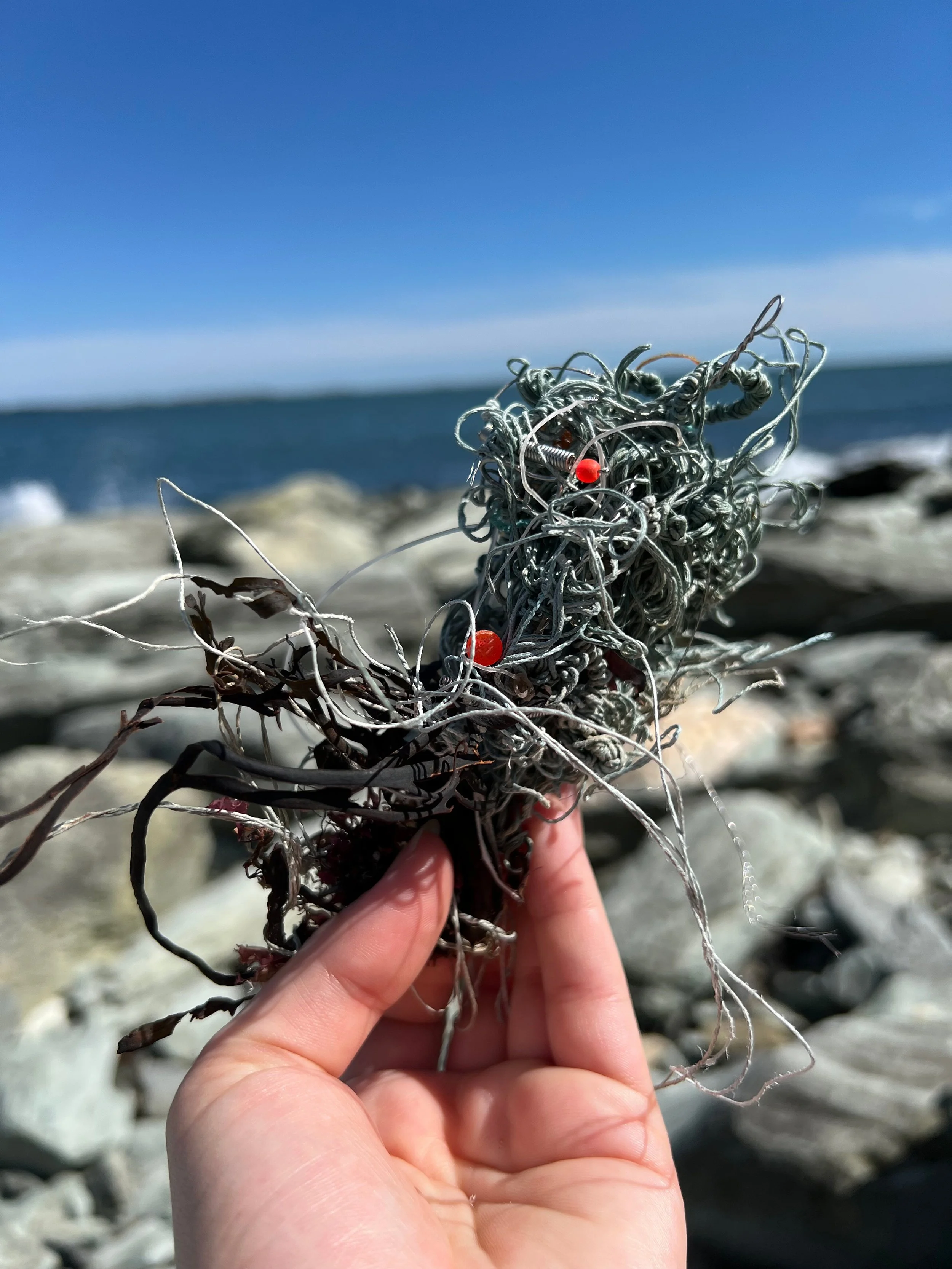
Emma Welty collecting fishing line at low tide along the shore in Rhode Island, 2025. Many hours are needed to collect and detangle the material before lace making can begin. Photo credit: @ Emma Welty 2025.
Emma’s maternal great-grandmother had been an Armenian lacemaker, teacher, and genocide survivor. She made needlace, crocheted lace, and Aintab drawn lace, but sadly, never taught the next two generations to make needlelace. Nonetheless, Emma remembers: “Seeing my great-grandmother’s janyak [needlelace] in my mom’s collection of family textiles was what first motivated me. It was a small, white cotton doily but I thought it was the most stunning and magnetic object. The fact that I didn’t know anyone at the time who practiced the technique made the work even more compelling.”
Born 1991, Emma grew up in Western Connecticut and now lives in Providence, Rhode Island. As an artist, Emma is currently working on a number of ongoing projects including a series of needlelace pieces made out of reclaimed fishing line. Because she read that lace emerged from a netmaking tradition, she thought it fitting to reconnect with maritime materials, while cleaning the beach in the process.
She teaches fiber art regionally throughout southern New England and occasionally in New York and is the Lead Educator at the Windham Textile and History Museum in Willimantic, Connecticut—a museum that interprets the history of the thread-making industry in Connecticut in the nineteenth and twentieth centuries. Emma also teaches a short three-hour introduction to needlelace making course, but is seeking opportunities to provide instruction over multiple days or weeks.
While Emma has dabbled in various fiber and sculpture techniques over the years, lace making and tapestry weaving have become the pillars of her creative practice and much of her current work combines needlelace with woven still lifes, landscapes and text-based artworks. Now that she has been practicing and teaching for some time, needlelace has become more of a tool in her toolkit rather than a monument to a fixed moment in history. Emma comments: “I am motivated by the future of Armenian craft and how much there is left for us to learn from tying these knots.”
website
instagram
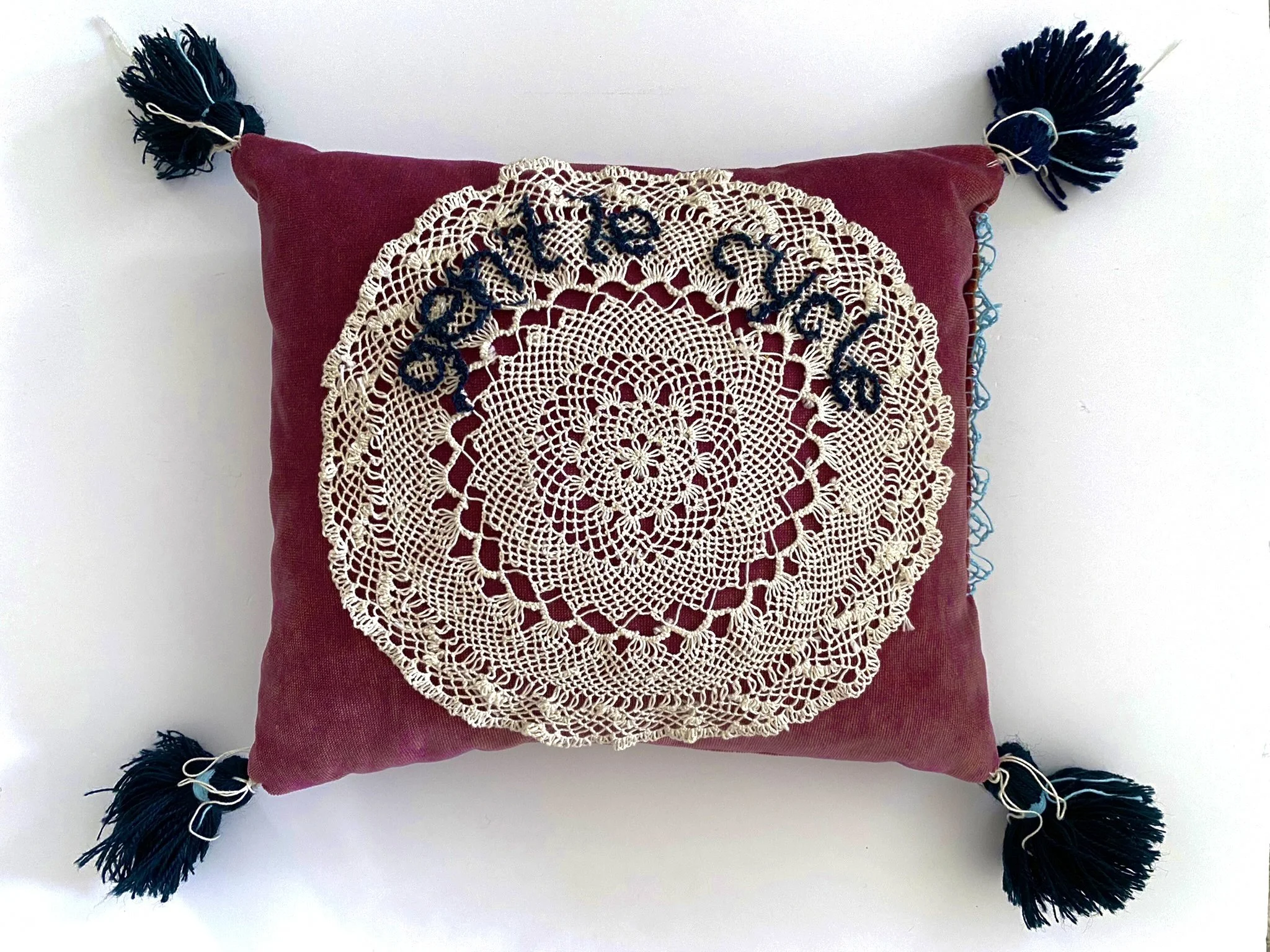
Emma Welty, Gentle Cycle, Connecticut, 2021. Part of a series called Hand Wash Lay Flat. "This series began during the Covid lockdown as I was forced to hand wash my clothing to avoid the laundromat. It was a slow and thoughtful process that made me consider community care, fast fashion, and the meaning of heirlooms." Exhibited at Studio Hill Gallery in Woodbury CT in 2021 and Heirloom Gallery in Brooklyn NY in 2023. Photo credit: @ Emma Welty 2021.
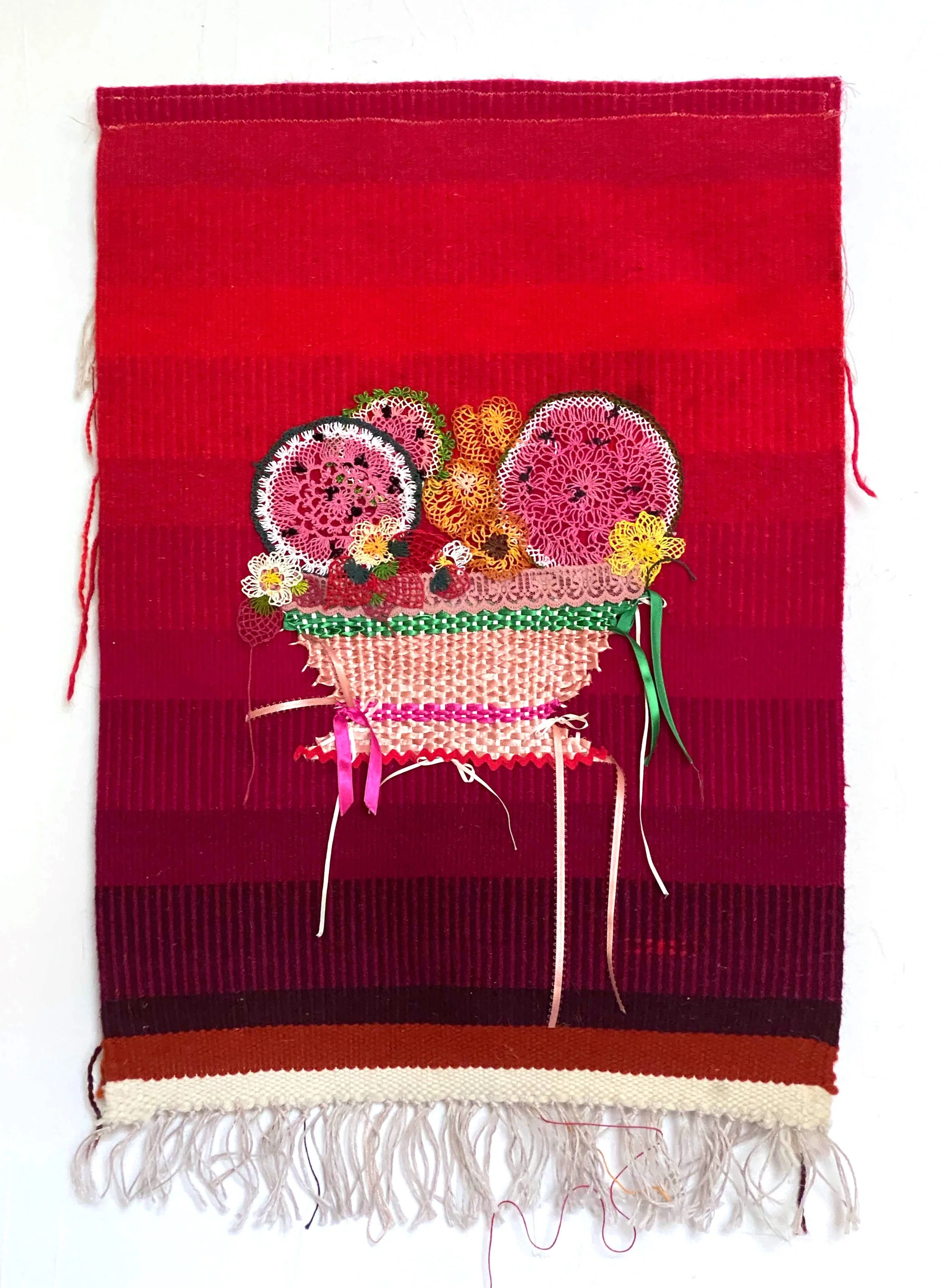
Emma Welty, The Scent of Apricots, Connecticut, 2022. Early exploration of lace as drawing, inspired by and named after Arshile Gorky's painting of the same title. Exhibited at the University of Arizona, Tuscon, AZ, 2022 and the Jamestown Art Center, RI, 2024. Photo credit: @ Emma Welty 2022.
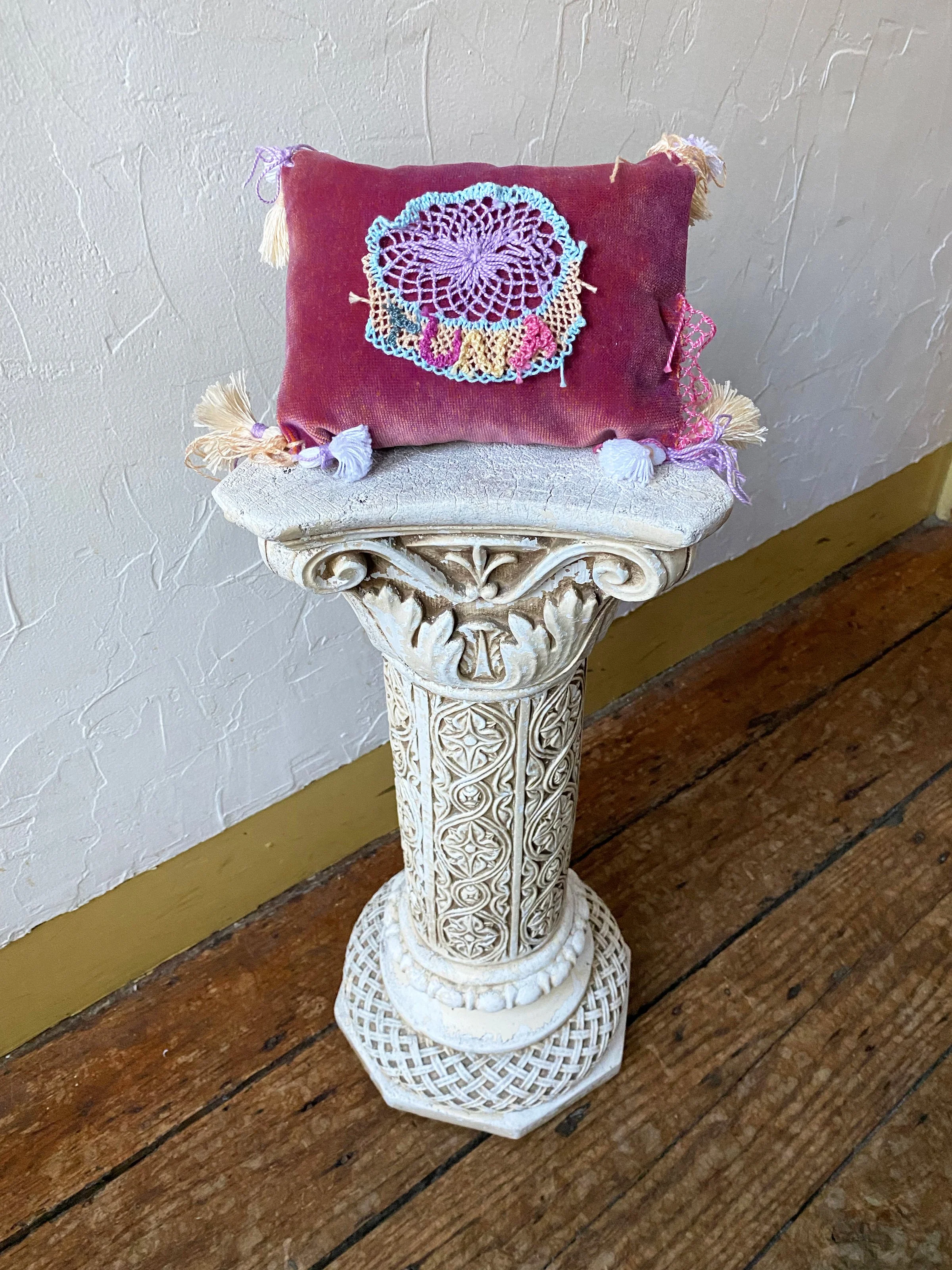
Emma Welty, Tuna, Connecticut, 2022. Woven still life with needlelace trim blending Armenian symbols and traditions with American lived experience. Photo credit: @ Emma Welty 2022.
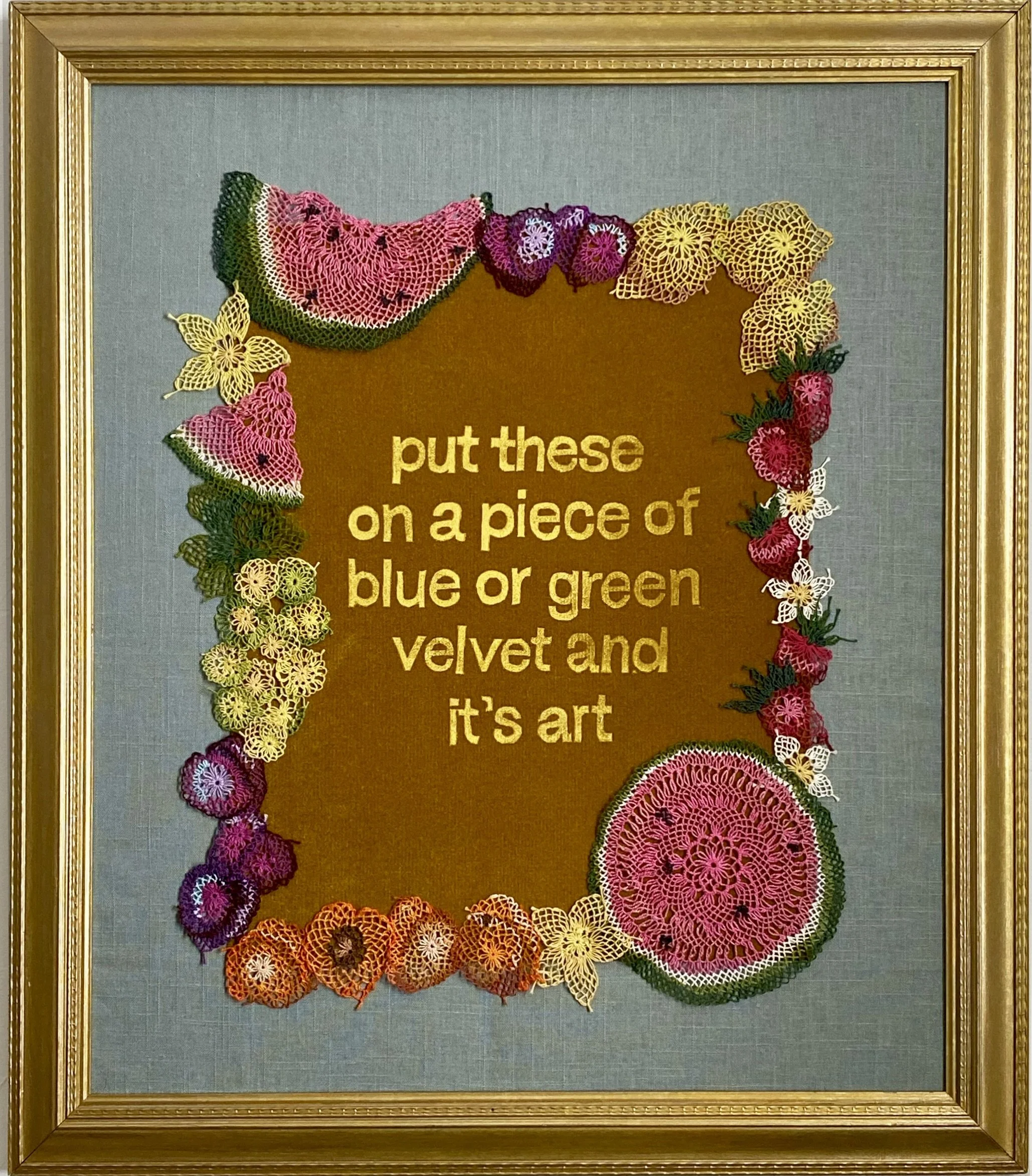
Emma Welty, Inverse Still Life, Connecticut, 2023. Made in response to an article in the Spokane review (1998) about a lacemaker named Aurelia Riley who lived outside of Seattle and learned to make Armenian lace from a travelling teacher named "Mrs. Joseph" in the 1930s. Photo credit: @ Emma Welty 2023.
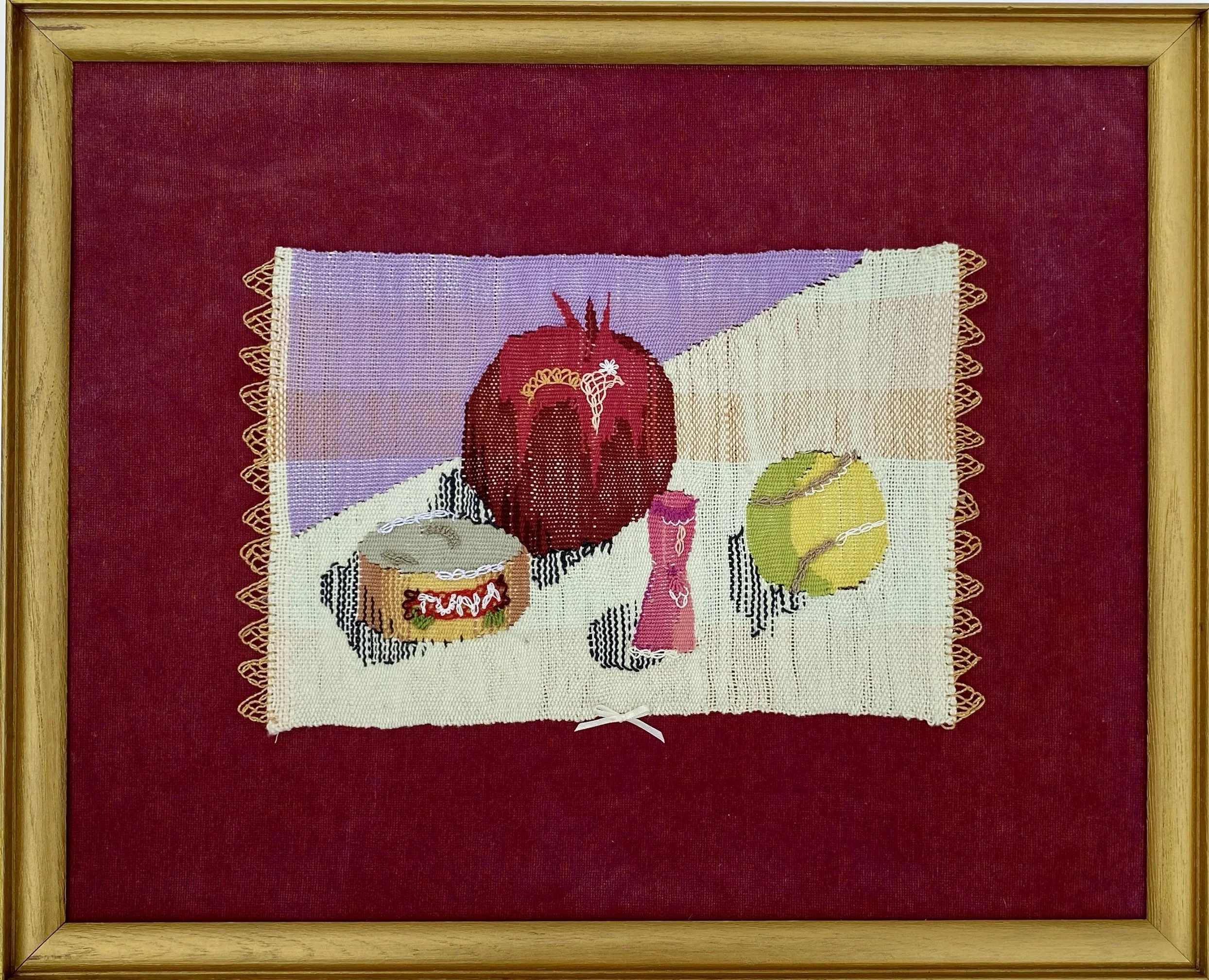
Emma Welty, Still Life with Sally Hansen Insta-Dri, Connecticut, 2023. Woven still life with needlelace trim blending Armenian symbols and traditions with American lived experience. Photo credit: @ Emma Welty 2023.
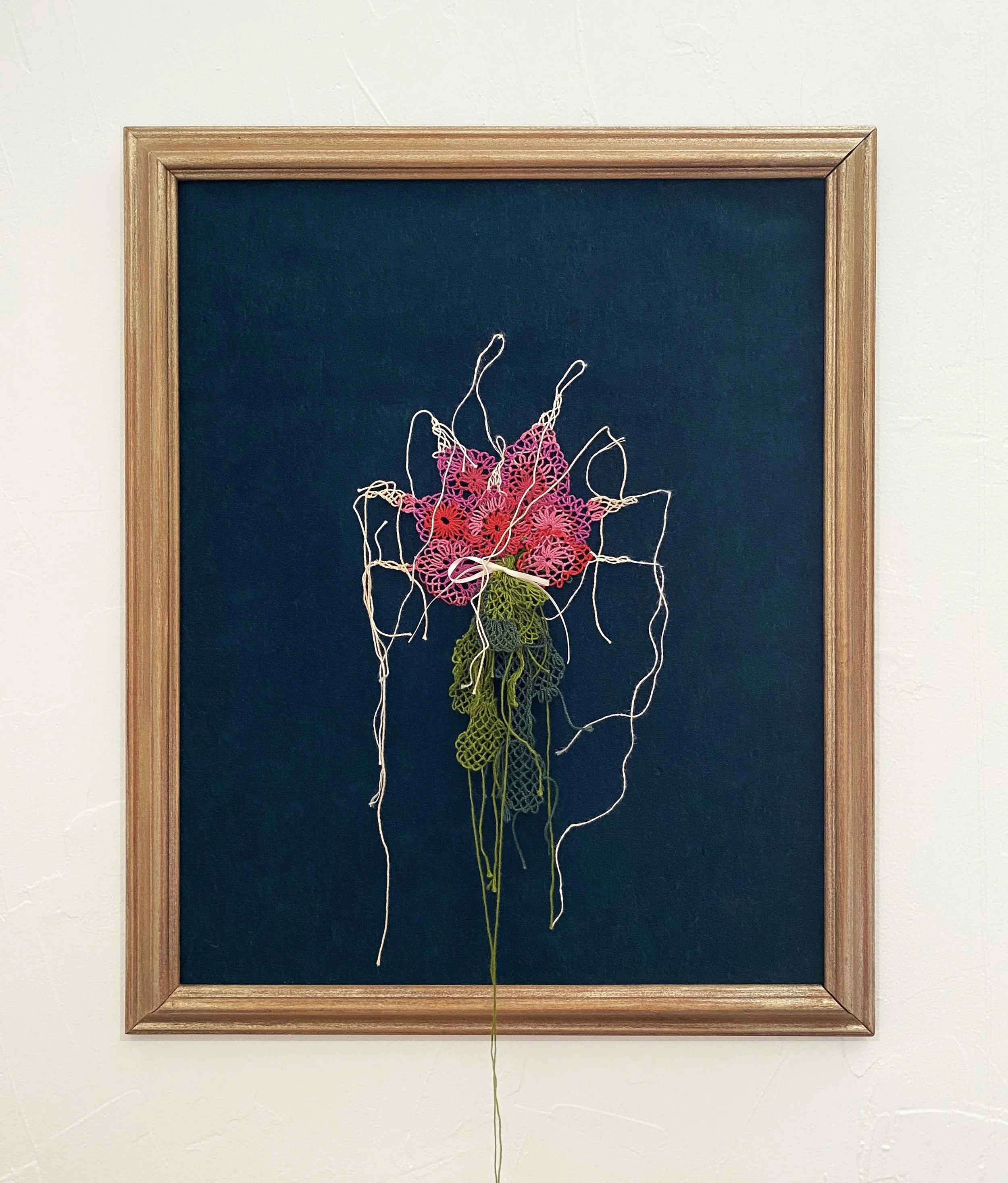
Emma Welty, New Mom in Artsakh Gifted A Bouquet of Radishes After Being Discharged From Hospital Amid Shortages of Goods as Azerbaijan’s Blockade Enters day 19, Connecticut, 2023. Based on an image of a bouquet of radishes gifted to a new mom in Artsakh during the 2022 blockade. Photo credit: @ Emma Welty 2023.
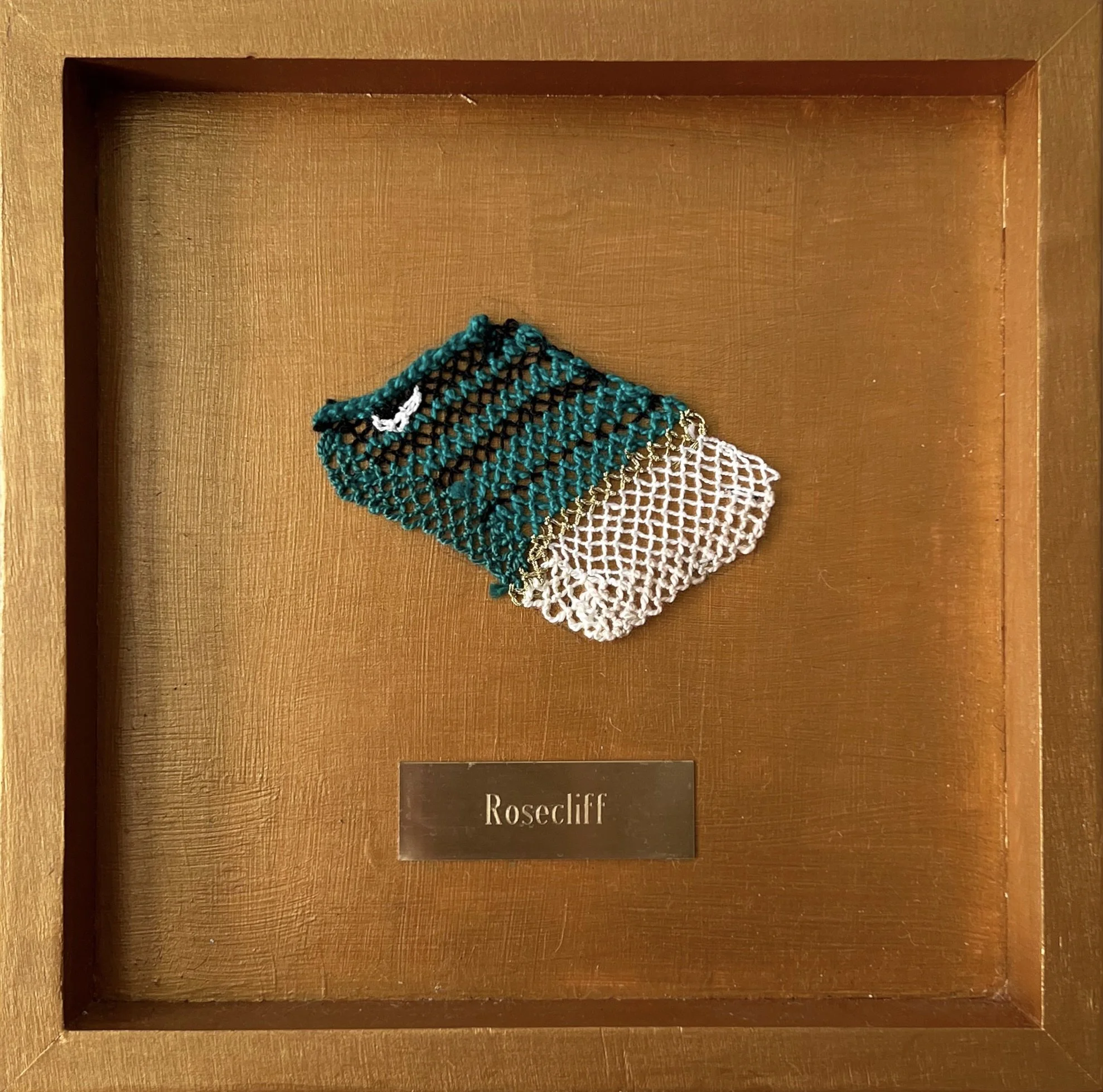
Emma Welty, Rosecliff, Rhode Island/Connecticut, 2024. Part of a series called
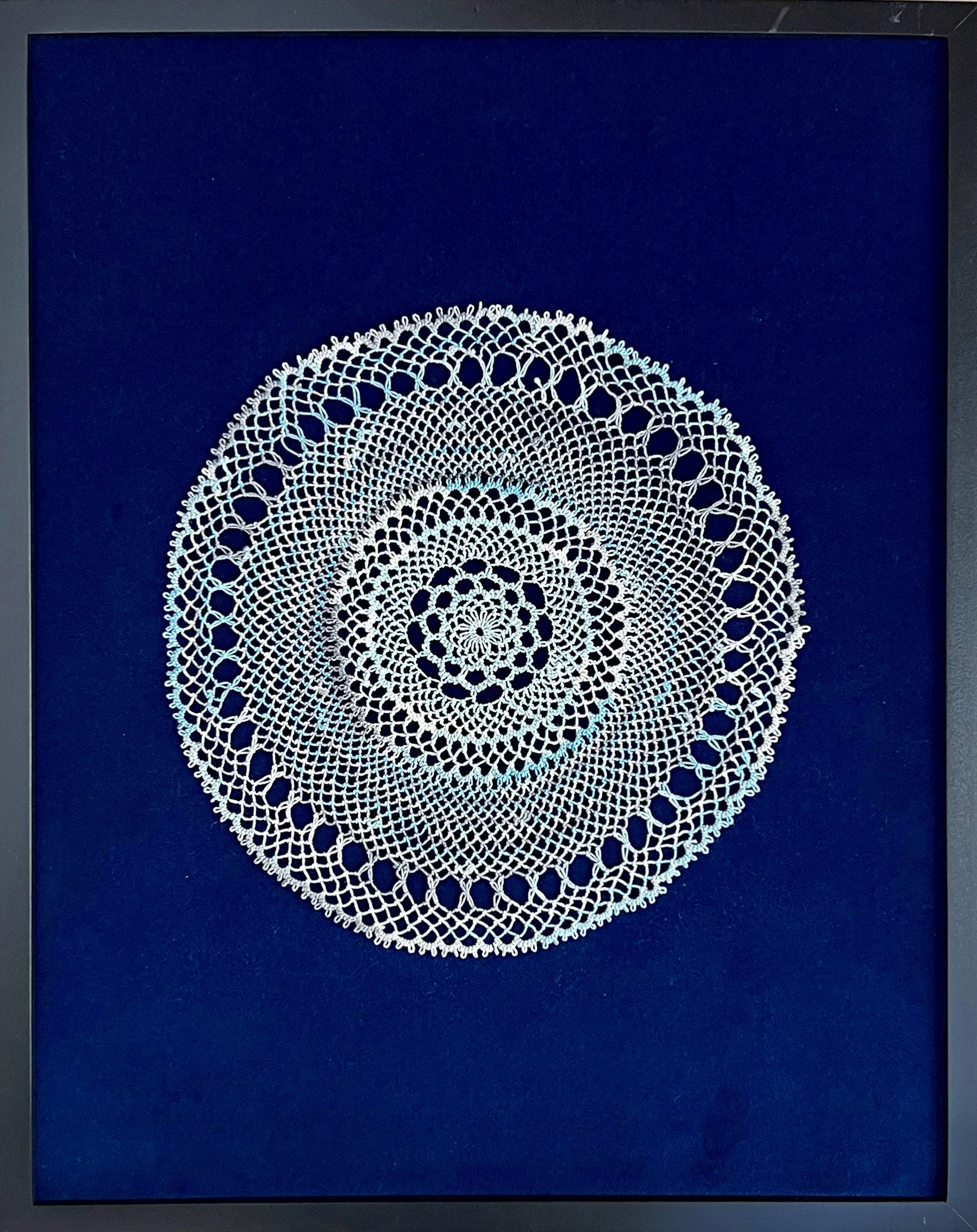
Emma Welty, Marine Line Janyak 2, Rhode Island, 2025. Part of an ongoing series of needlelace works made of reclaimed fishing line sourced from the shorelines of Rhode Island. Photo credit: @ Emma Welty 2025.
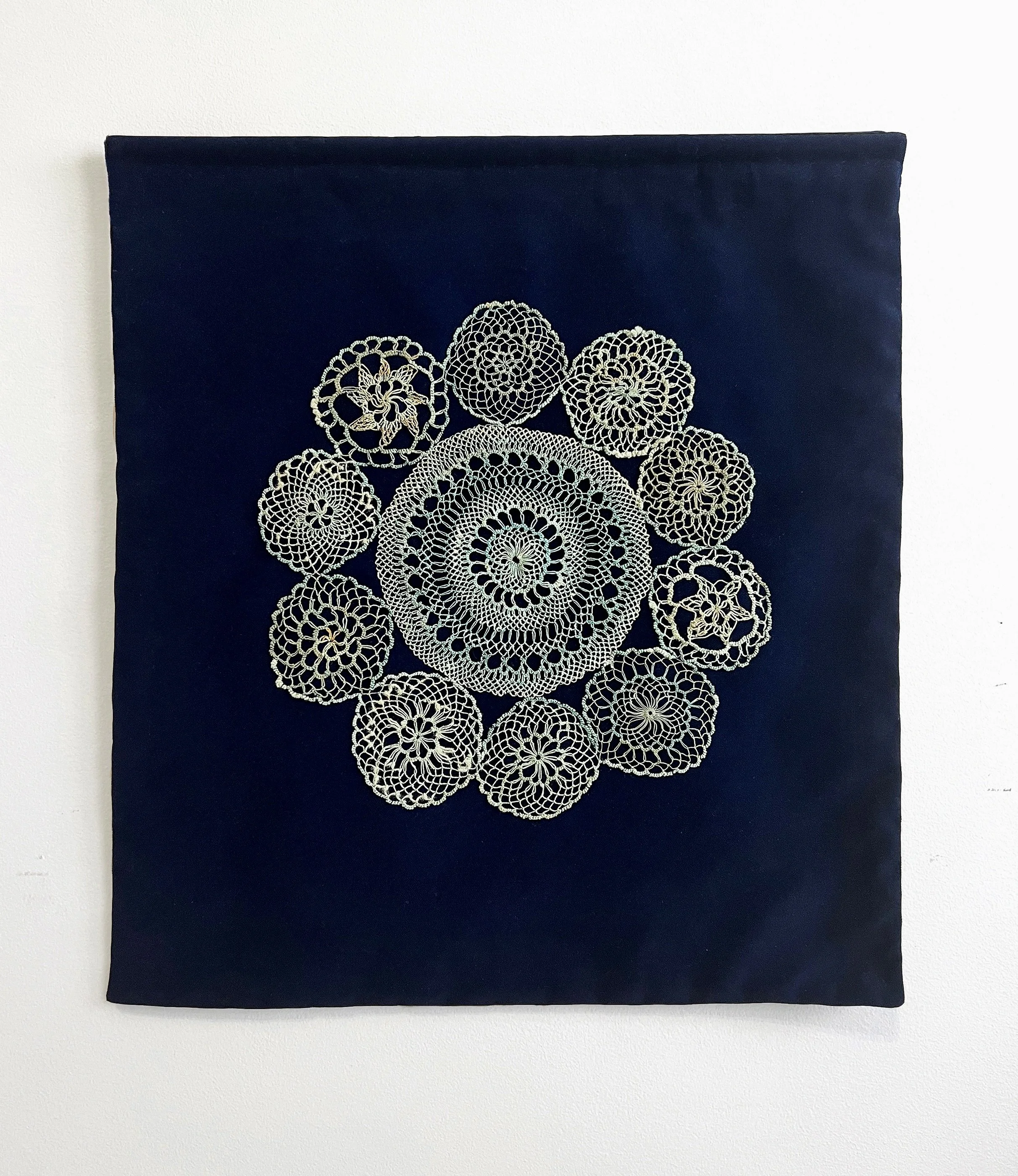
Emma Welty, Marine Line Janyak 6, Rhode Island, 2025. Part of an ongoing series of needlelace works made of reclaimed fishing line sourced from the shorelines of Rhode Island. Photo credit: @ Emma Welty 2025.
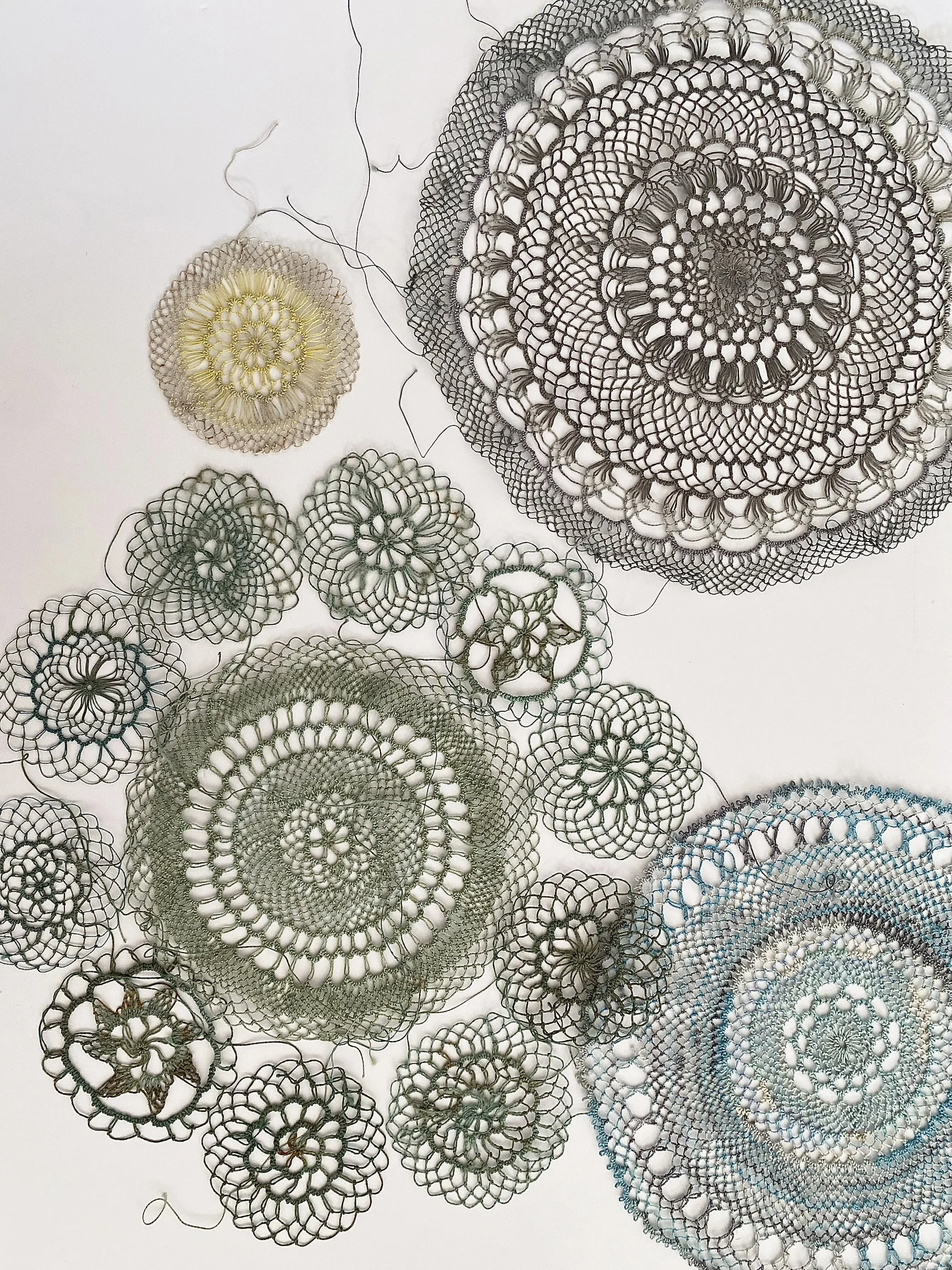
Emma Welty, needlelace doilies, Rhode Island, in process. Part of an ongoing series of needlelace works made of reclaimed fishing line sourced from the shorelines of Rhode Island. Photo credit: @ Emma Welty 2025.
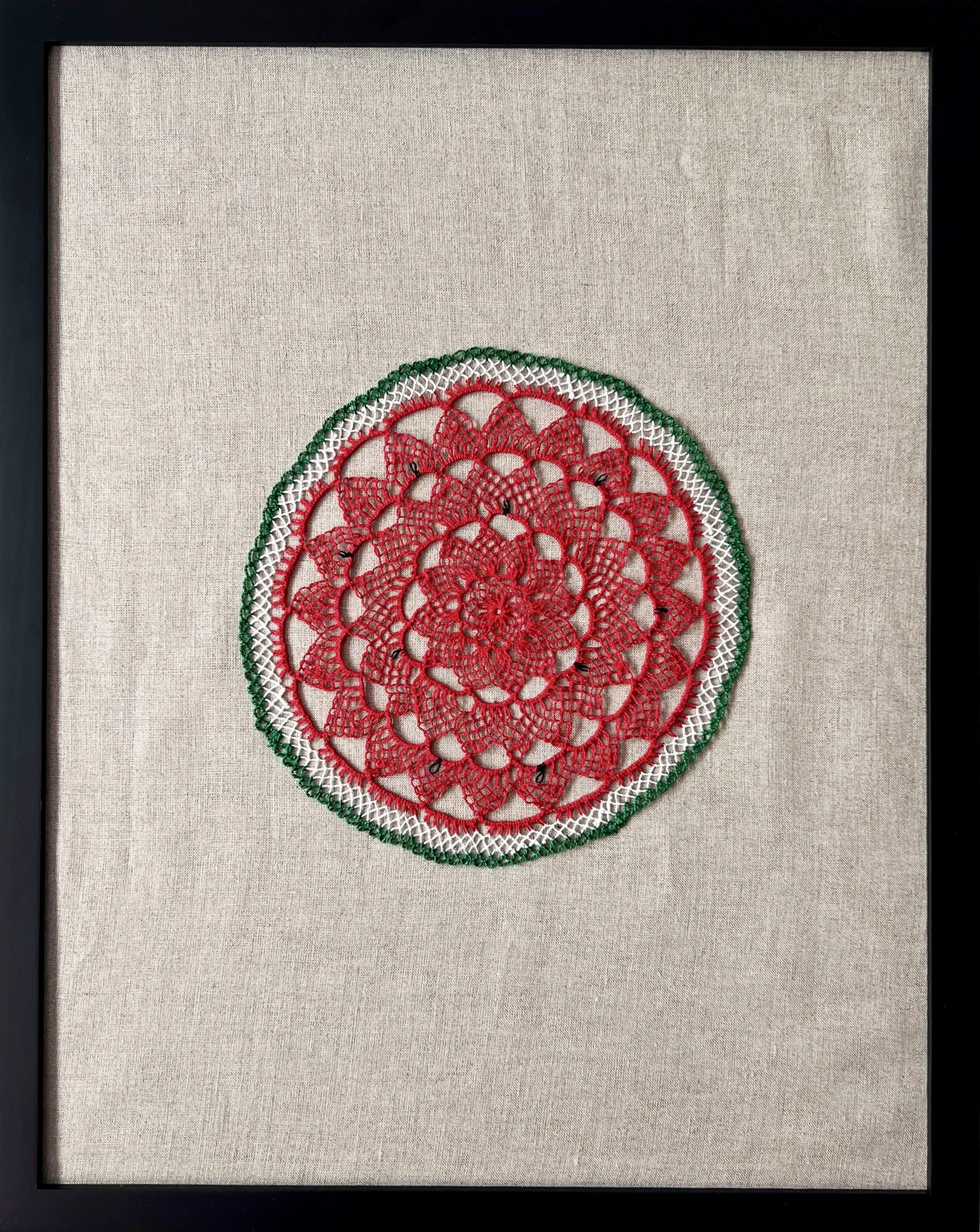
Emma Welty, Free Palestine, Rhode Island, CT. Exhibited at Woodbury Public Library and Windham Textile and History Museum, 2025. Photo credit: @ Emma Welty 2025.