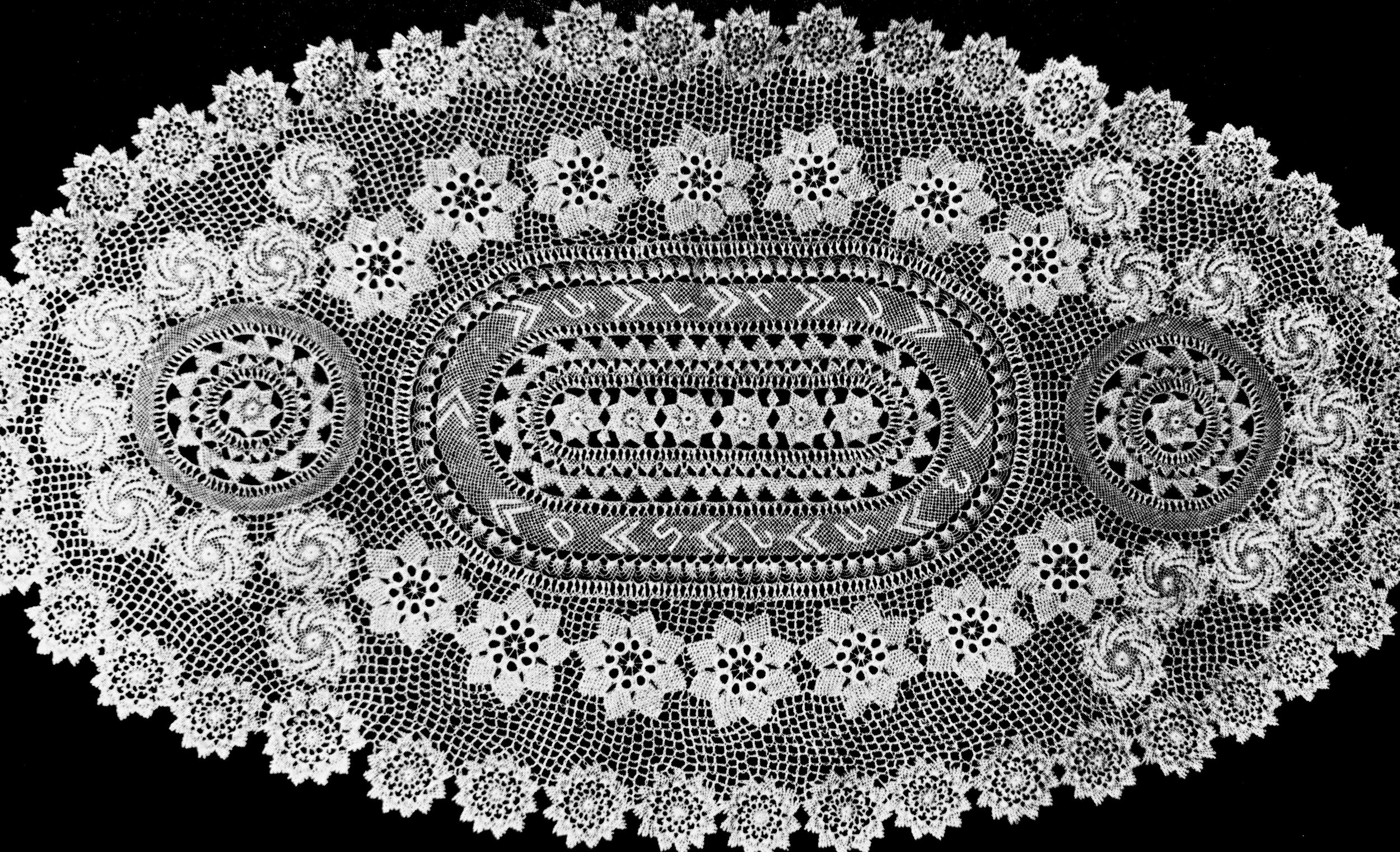
Alice Odian Kasparian, needlelace tablecloth, featuring the maker’s maiden name, ԱԼԻՍ ՕՏԵԱՆ, stitched in Armenian letters around the oval medallion. From page six of Armenian Needlelace and Embroidery by Alice Odian Kasparian. Photo credit: © Harry Naltchayan 1983.
a note on language
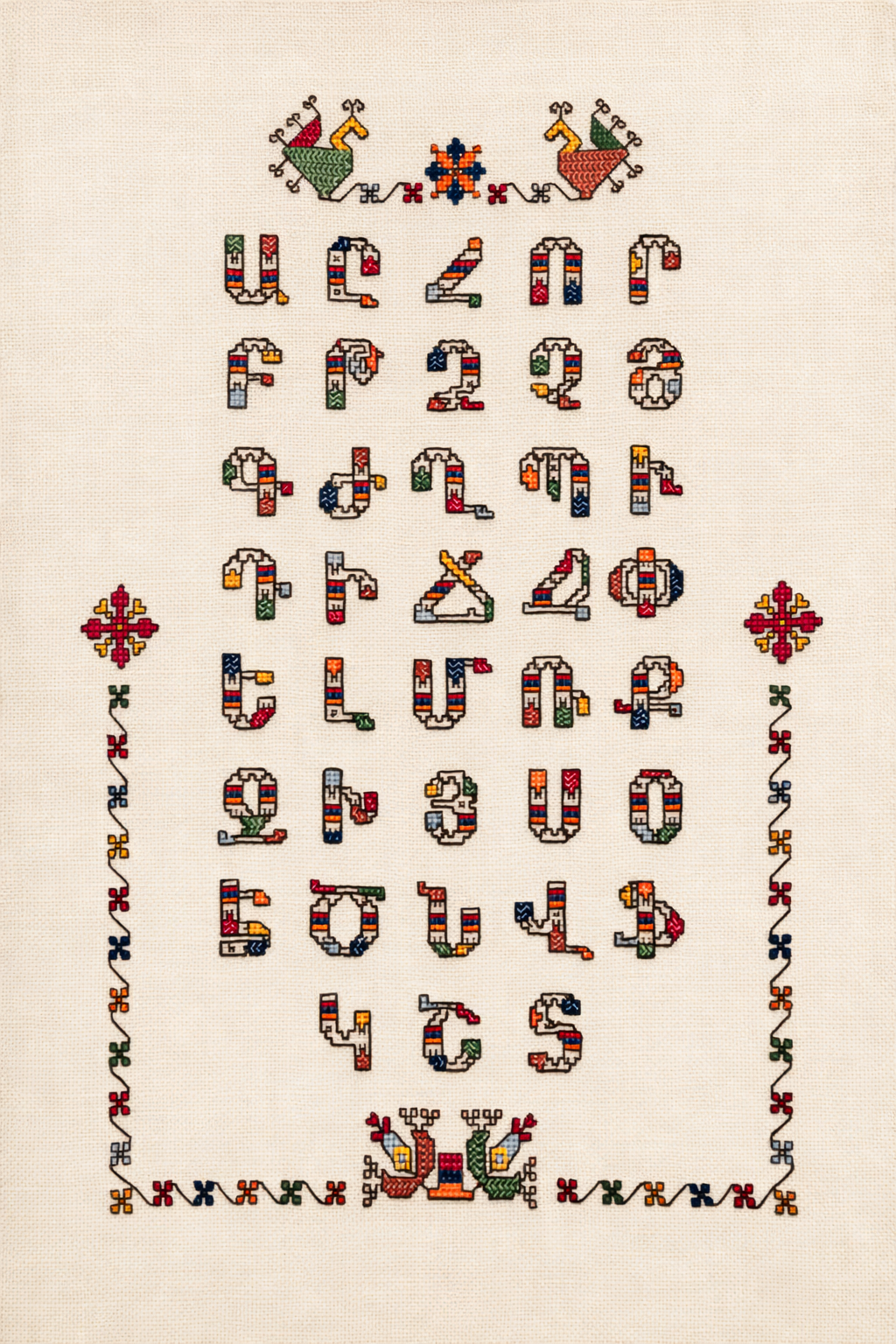
Image 1. Unknown maker, Armenian alphabet embroidered via traditional cross-stitch from Svaz (present-day Sivas, Turkey), probably made in Beirut, Lebanon, date unknown. On display at a restaurant in Şişli, Istanbul, Turkey. Photo credit: © Elise Youssoufian 2025.
Language, like other cultural forms including threadwork, is a dynamic genre. Needlelace-making is similar to the process of language-making. Both are time-based processes—repetitive, rhythmic combinations of discrete units that emerge as compositions of meaning.
Needlelace (a.k.a., needle lace) is the common term for the handwork tradition in English, the language with which we at the Armenian Needlelace Initiative are most familiar—having been born in the United States into lineages of Western Armenian-speaking families. In Western Armenian, the lace is often referred to as ձեռագործ (tserakordz, “handwork”) or ասեղնագործ (aseghnakordz, “needlework”); the common Eastern Armenian term is ասեղնագործ ժանյակ or simply ժանյակ (aseghnagorts janyak, “needlelace,” or janyak, “lace”). Staying true to the tongue of our motherlines, in needlelace-centered discussions throughout this site we have chosen to name, translate, and transliterate Armenian words into English in accordance with their Western Armenian usage, unless otherwise noted.
Spoken by Ottoman Armenians and their descendants, Western Armenian has been a stateless language for over one hundred years and was designated as “definitely endangered” by UNESCO in 2010. Yet the Armenian language, alphabet, and other cherished cultural forms have outlasted millennia of empires: Persian, Roman, Ottoman, and Russian. Over centuries of imperially enacted population separations, Western Armenian diverged from its classical Armenian roots and developed into its own language; its sister tongue, Eastern Armenian—the state language of today's Republic of Armenia—underwent significant changes during the Soviet era. Even so, to this day it is common to see Armenian letters and inscriptions in traditional forms such as rugs, carpets, threadwork (see Images 1 and 2), paintings, and carved stones, reflecting a cultural reverence for the language and a desire to affirm that we are still here despite efforts to annihilate us.
Like our language, Armenian populations continue to be in flux. In the wake of late nineteenth-century and early twentieth-century massacres that descended into full-scale genocide throughout historic Armenia, Anatolia, and Syria (present-day eastern Turkey, western Turkey, and parts of Syria, respectively), survivors fled across the world; for decades the diasporic communities predominantly spoke Western Armenian. Notable diasporic language changes arose beginning in the 1980s and have continued in war-spawned waves ever since, with surviving Eastern Armenian speakers joining and infusing communities with their own cultural forms.
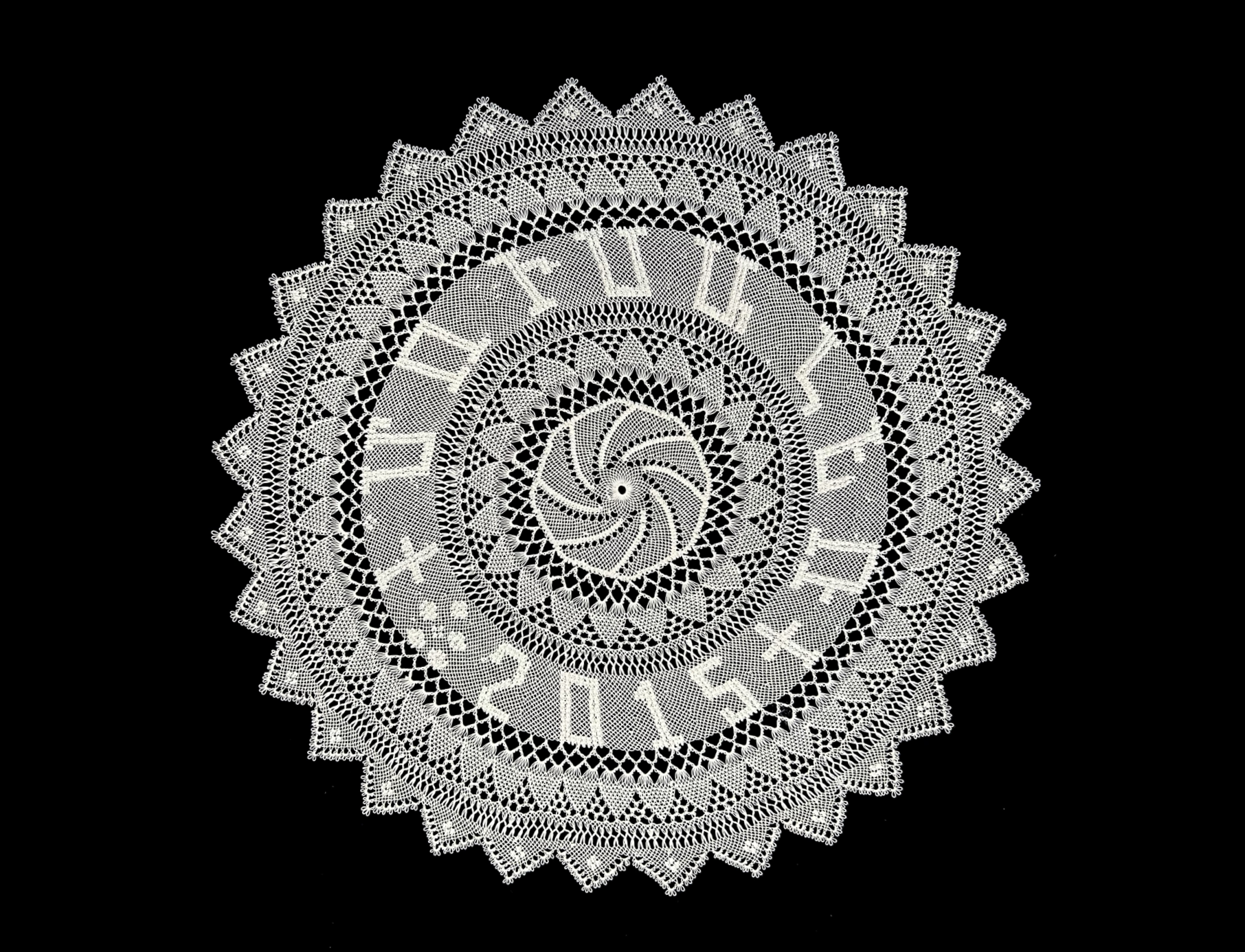
Image 2. Mari Silahli, large needlelace doily (one of a set of two) with ՄՈՒՍԱ ԼԵՌ (Musa Ler) stitched in Armenian (a.k.a., Musa Dagh in Turkish), Şişli, Istanbul, Turkey. Made in 2015 to commemorate her birthplace and ancestral home, a mountainous region known for its beauty and its people’s resistance to annihilation during the Armenian Genocide (1915-1923). Photo credit: © Deborah Valoma 2025.
Yet like our peoples, our sister languages have much more in common than the elements which seem to separate them. In contemporary references to the needlelace, increasingly we see the specific term for lace—ժանյակ (janyak, Eastern Armenian) or ժանեակ (janyag, Western Armenian)—being taken up by diasporans of diverse backgrounds, tugging on the threads which still connect us.
• back to the top •