dzaghig chitchi portfolio
turkey
Dzaghig Chitchi was born in 1948 in Vakıflıköy, known as the last standing Armenian village in Turkey. As descendants of the resistance fighters of Musa Dagh, made famous by the 1933 novel by Franz Werfel entitled Forty Days of Musa Dagh (Die vierzig Tage des Musa Dagh), Vakıflıköy residents hold a special pride their Western Armenian traditions—including needlelace.
Dzaghig first learned needlelace from her mother and female relatives as a child in Vakıflıköy, but continued to practice when she came to Istanbul at the age of eight to attend an Armenian elementary school run by nuns. At the age of fifteen or sixteen, she was selected to care for the younger children, which she did until she was engaged at the age of nineteen.
Dzaghig enjoyed making needlelace, and as a homemaker and mother, turned the work into a business by accepting orders. She was happy mixing business with pleasure and added: “It helps pass the time; I got everything I wanted.” The money she earned she invested in herself. Her husband would never accept money from his wife, Dzaghig explained. “That was traditional in Turkey. Men didn’t expect women to earn money. They saw it as their own financial responsibility to support the family.”
Dzaghig’s daughter and granddaughter are proud of their mother and grandmother’s stellar work. For her granddaughter’s marriage in 2024, Dzaghig prepared a trousseau—one of the traditional uses of needlelace—including the extraordinary table runner pictured below. Relatives in the United States help Dzaghig sell pieces occasionally, but she continues her practice primarily for relaxation.
Dzaghig and Mari Silahli grew up in the same village where their families knew each other and today live in the same neighborhood of Istanbul. Armenian needlelace in the Hatay area has a fascinating history that will be shared in the upcoming story “From Port Said Back to the Mountain.”
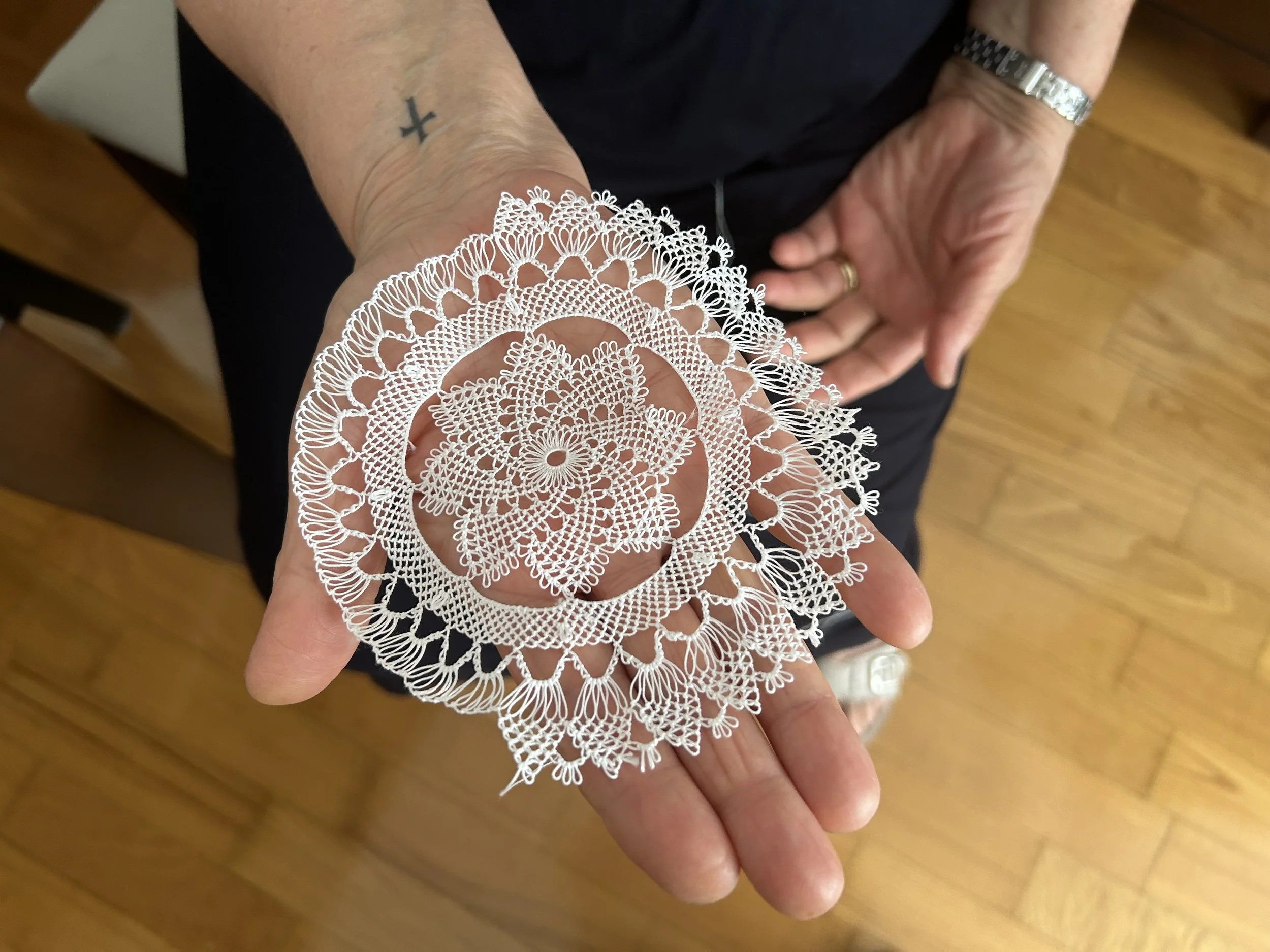
Dzaghig Chitchi holding in-process doily, Şişli, Istanbul, Turkey, 2024. Photo credit: © Deborah Valoma 2024.
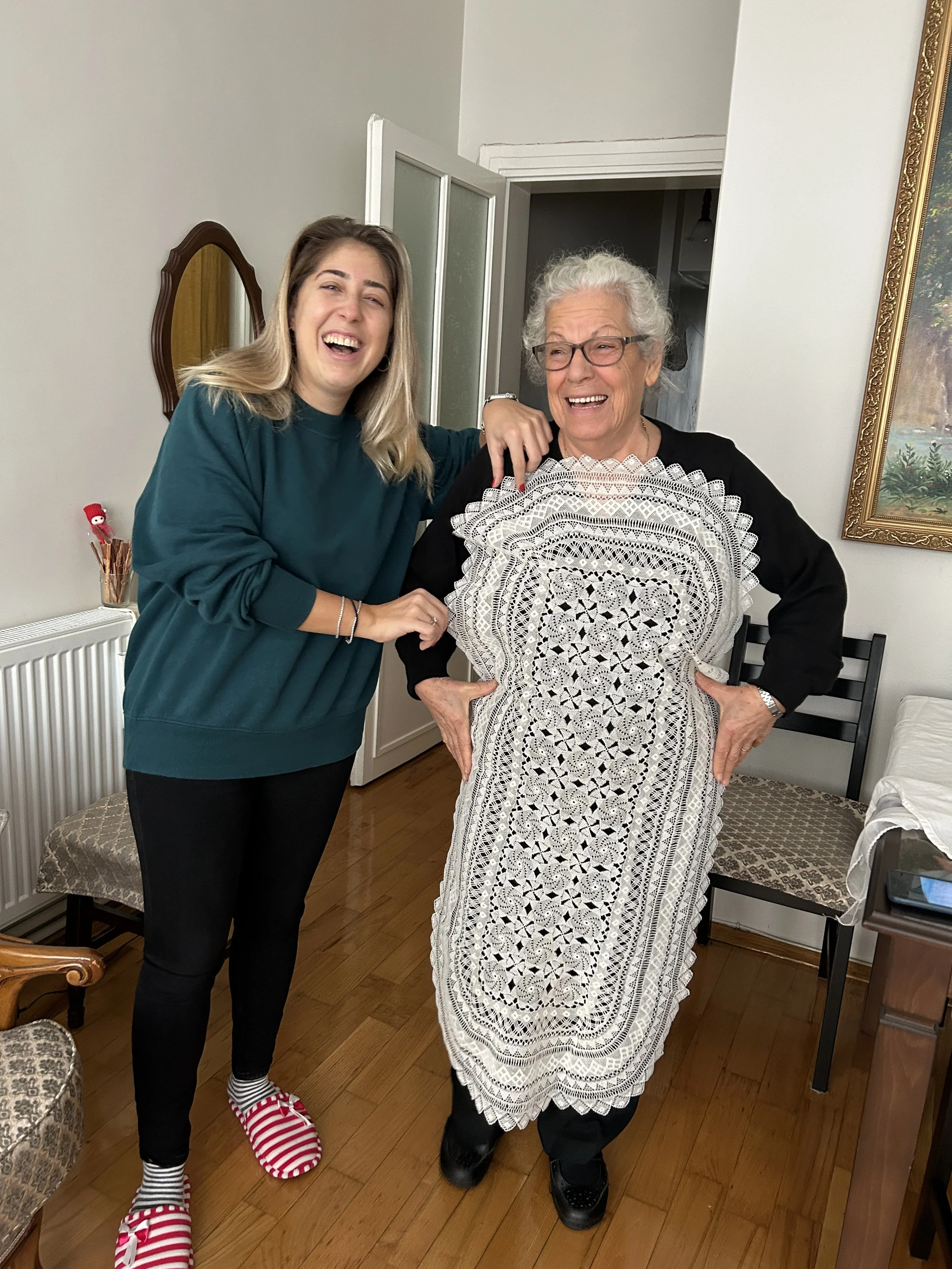
Dzaghig Chitchi and granddaughter Tais Nune Çitci Torosoğlu showing a needlelace table runner made for her granddaughter's trousseau, Şişli, Istanbul, Turkiye, 2023. Photo credit: © Deborah Valoma 2023.
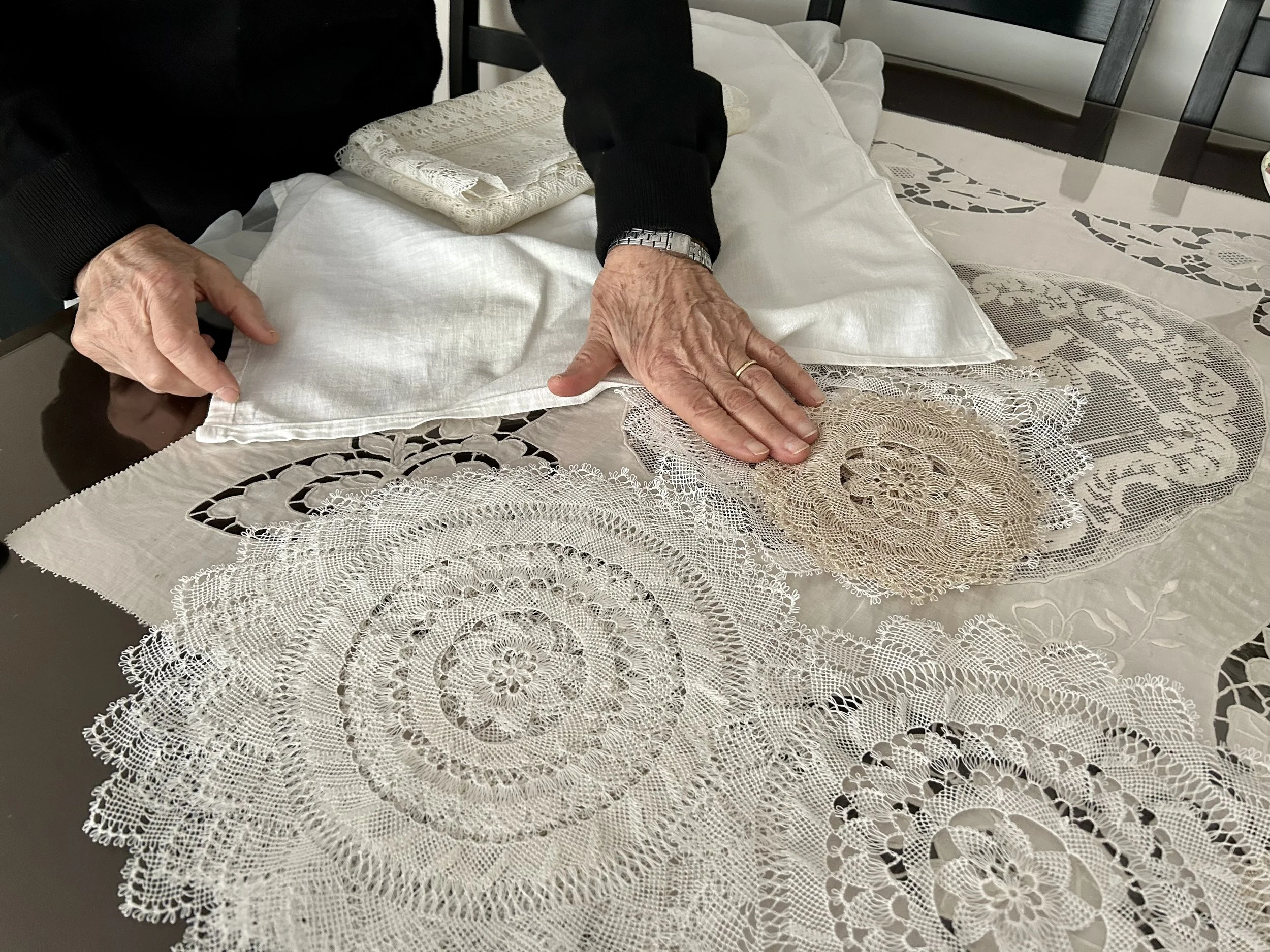
Dzaghig Chitchi displaying her needlelace work, Şişli, Istanbul, Turkey, 2023. Photo credit: © Deborah Valoma 2023.
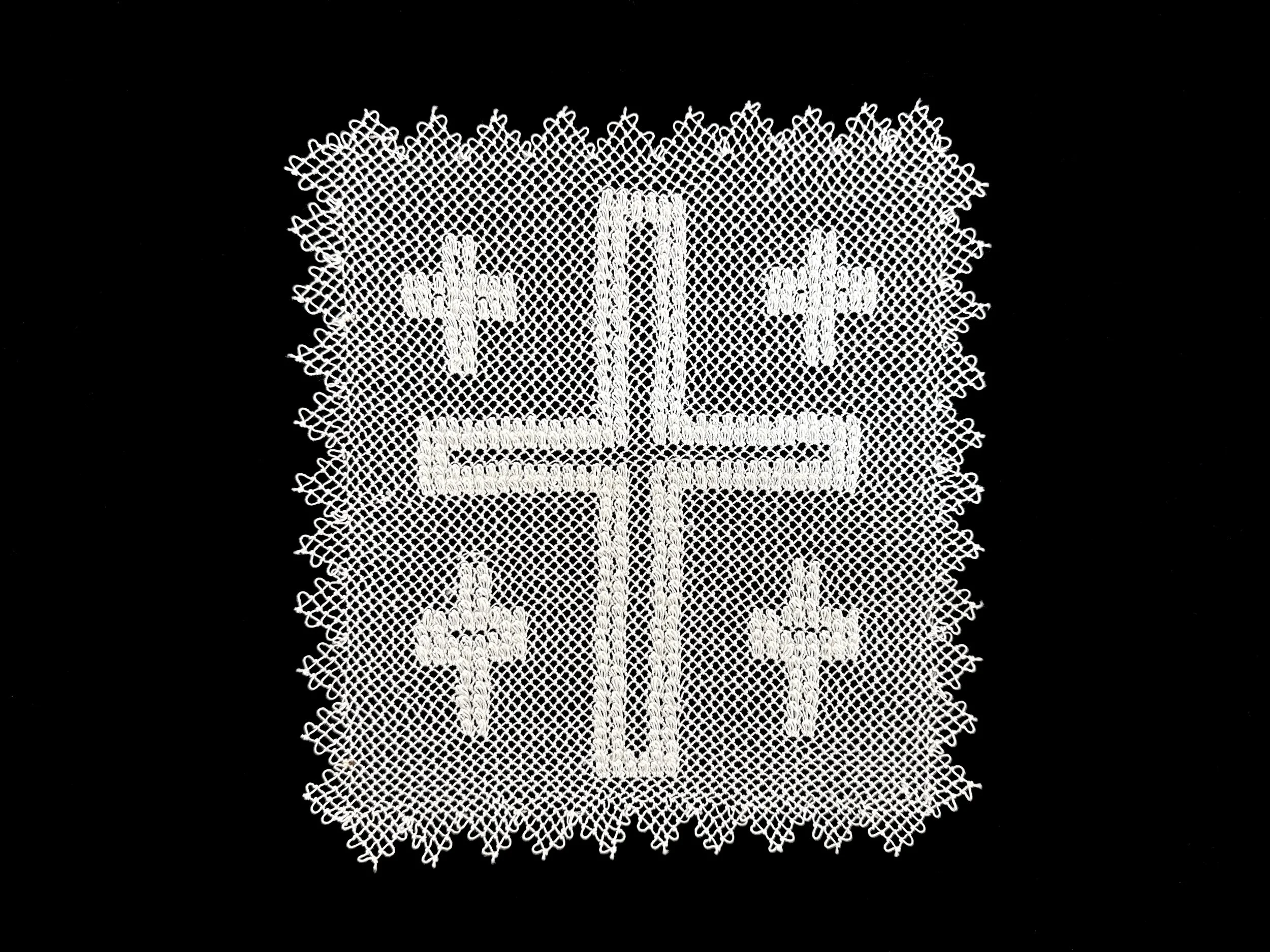
Dzaghig Chitchi, needlelace cross, Şişli, Istanbul, Turkey. Photo credit: © Deborah Valoma 2023.
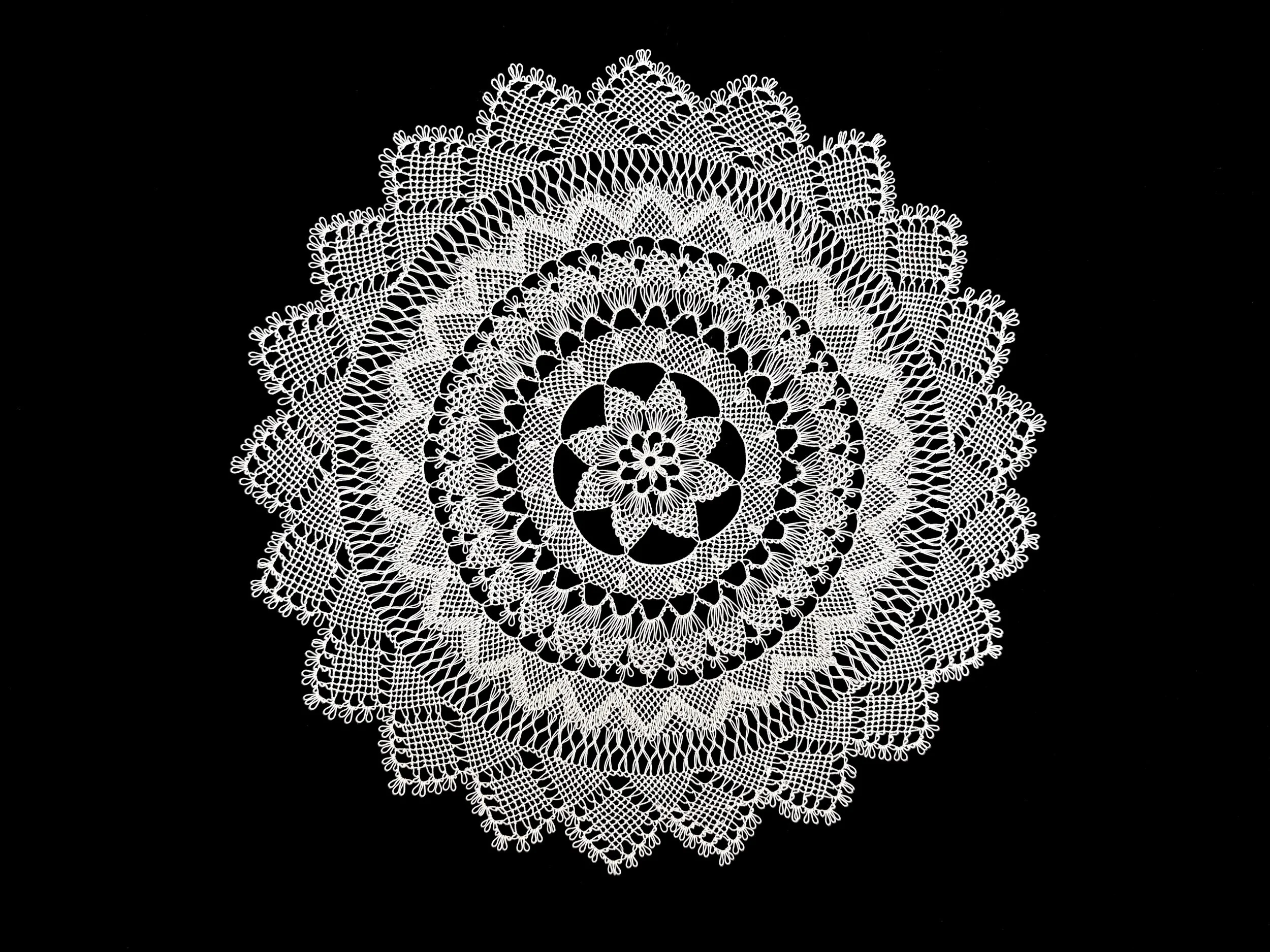
Dzaghig Chitchi, needlelace doily, Şişli, Istanbul, Turkey, 2023. Photo credit: © Deborah Valoma 2023.
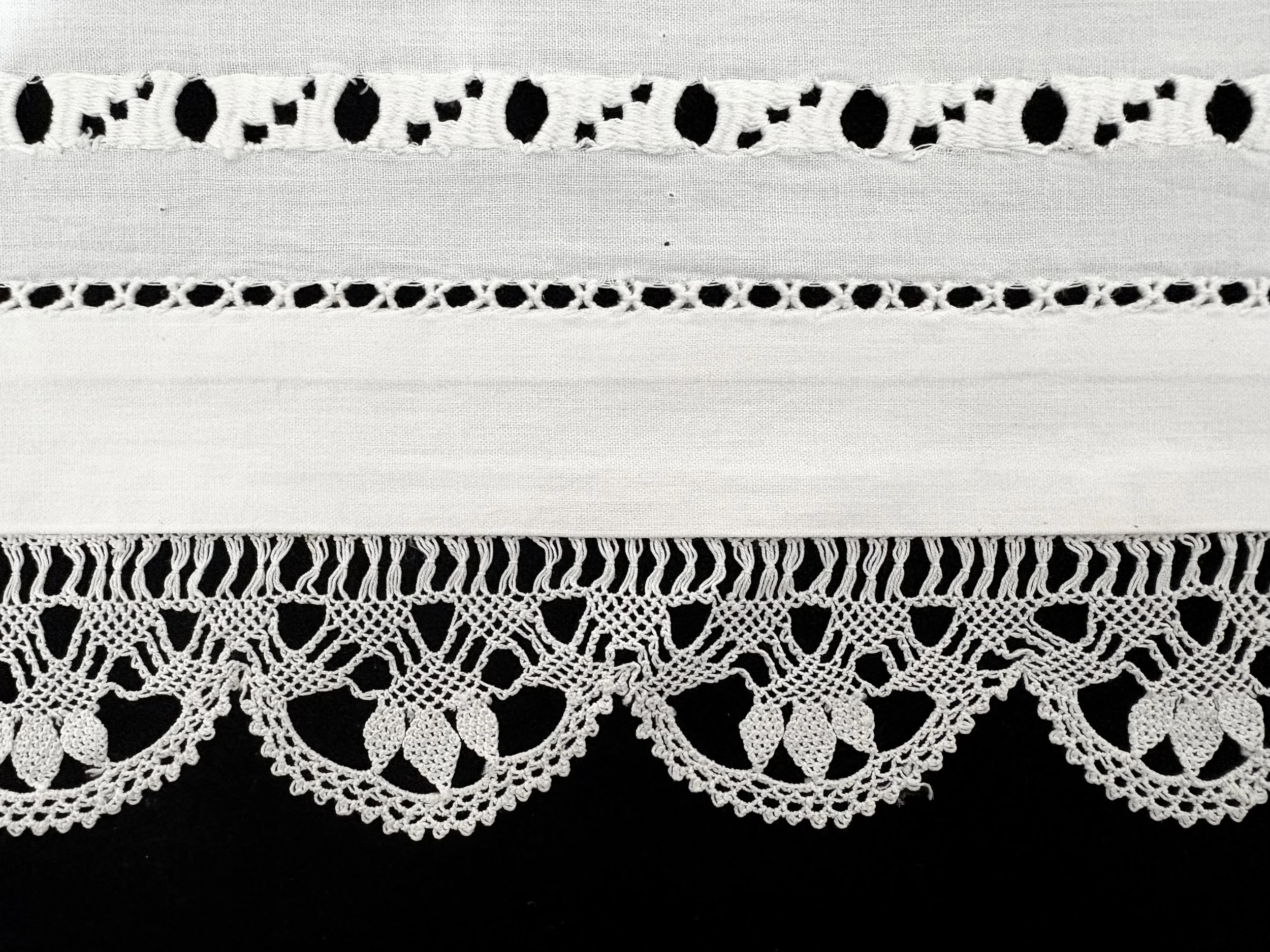
Dzaghig Chitchi, needlelace trim, Şişli, Istanbul, Turkey. Photo credit: © Deborah Valoma 2025.
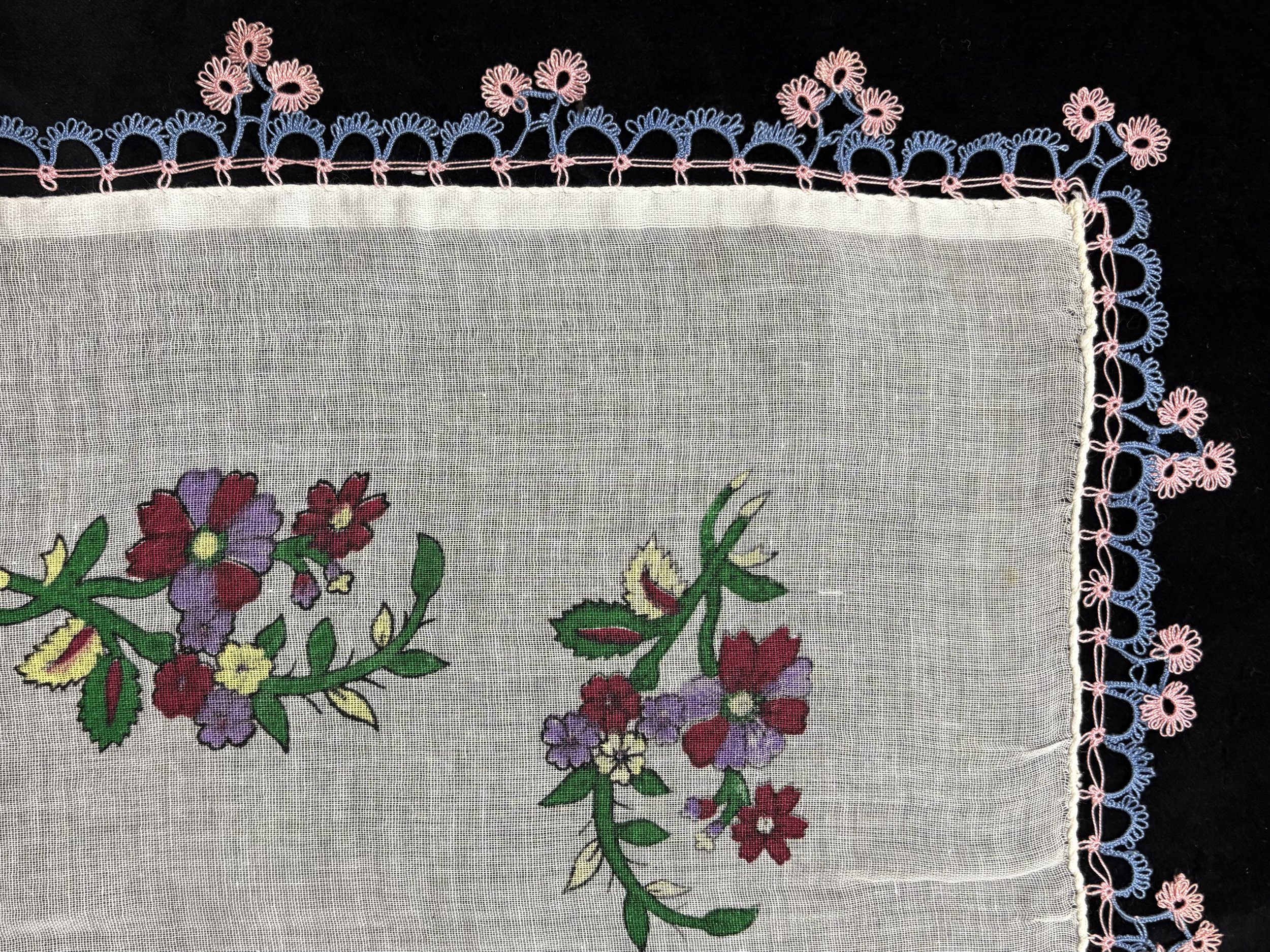
Dzaghig Chitchi, needlelace trim on kerchief, Şişli, Istanbul, Turkey. Photo credit: © Deborah Valoma 2025.