maral sheuhmelian portfolio
armenia
Maral Sheuhmelian is a Yerevan-based folk arts expert specializing in making and teaching traditional forms of Armenian needlework as a means of promoting cultural preservation. With extensive knowledge of stitches familiar to Armenian women in Syria—e.g., from Svaz, Marash, Dikranagerd, Van, Malatya, Ourfa, and Antep—she has taught countless classes in Armenia and also enjoys visiting other countries regularly to lead workshops and exhibit her masterful creations, including several of the works featured in the image gallery below.
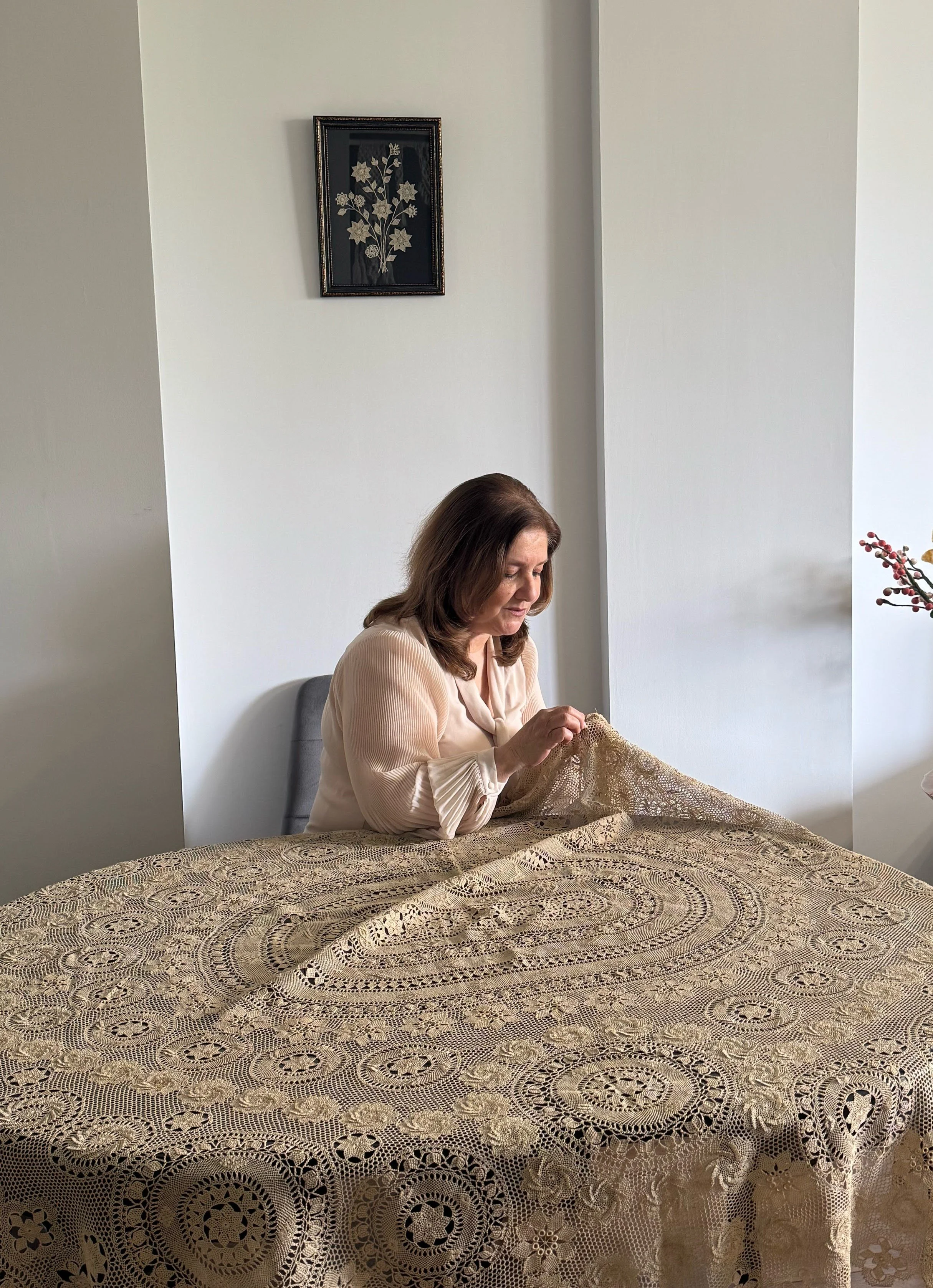
Mary Mikhjian (maker), large needlelace bedcover being repaired by her granddaughter, Maral Sheuhmelian (center), in Yerevan, Armenia. Made in Aleppo, Syria, pre-1960, for the օժիտ (ojid, “dowry”) of her daughter, Maral's mother, Lusine. Photo credit: © Maral Sheuhmelian 2026.
Raised in Aleppo, Syria, Maral began learning to make Armenian needlelace in her home, from her grandmothers Makrouhi Sheuhmelian and Mary Mikhjian in the early 1960s at a very young age. Remarkably, Maral took her first steps in needlelace making even before she learned how to walk! As she puts it, “I was sitting near my grandmother and trying to copy her. Admiring her skill awakened my interest in and love of lace and embroidery.” Treasuring those precious early years with her grandmothers, Maral kept learning any way she could on her own, improving and expanding her needlework skills including several non-Armenian embroidery techniques.
Like tens of thousands of Syrian Armenians during the Syrian Civil War, in 2015 Maral and her family moved from Aleppo to Armenia. Her life changed dramatically, yet her skills and creative vision never left her side, and she has become well known for developing and producing goods which combine traditional techniques in new ways—always with natural materials like cotton and wool. In 2018, she was a featured needlework artist at the Smithsonian Folklife Festival Armenia: Creating Home in Washington DC. Today, she employs other Syrian Armenian women living in Armenia due to both the high demand for her handwork designs and her drive to preserve and share Armenian culture with the world.
instagram
facebook (personal)
facebook (art)
email
linkedin
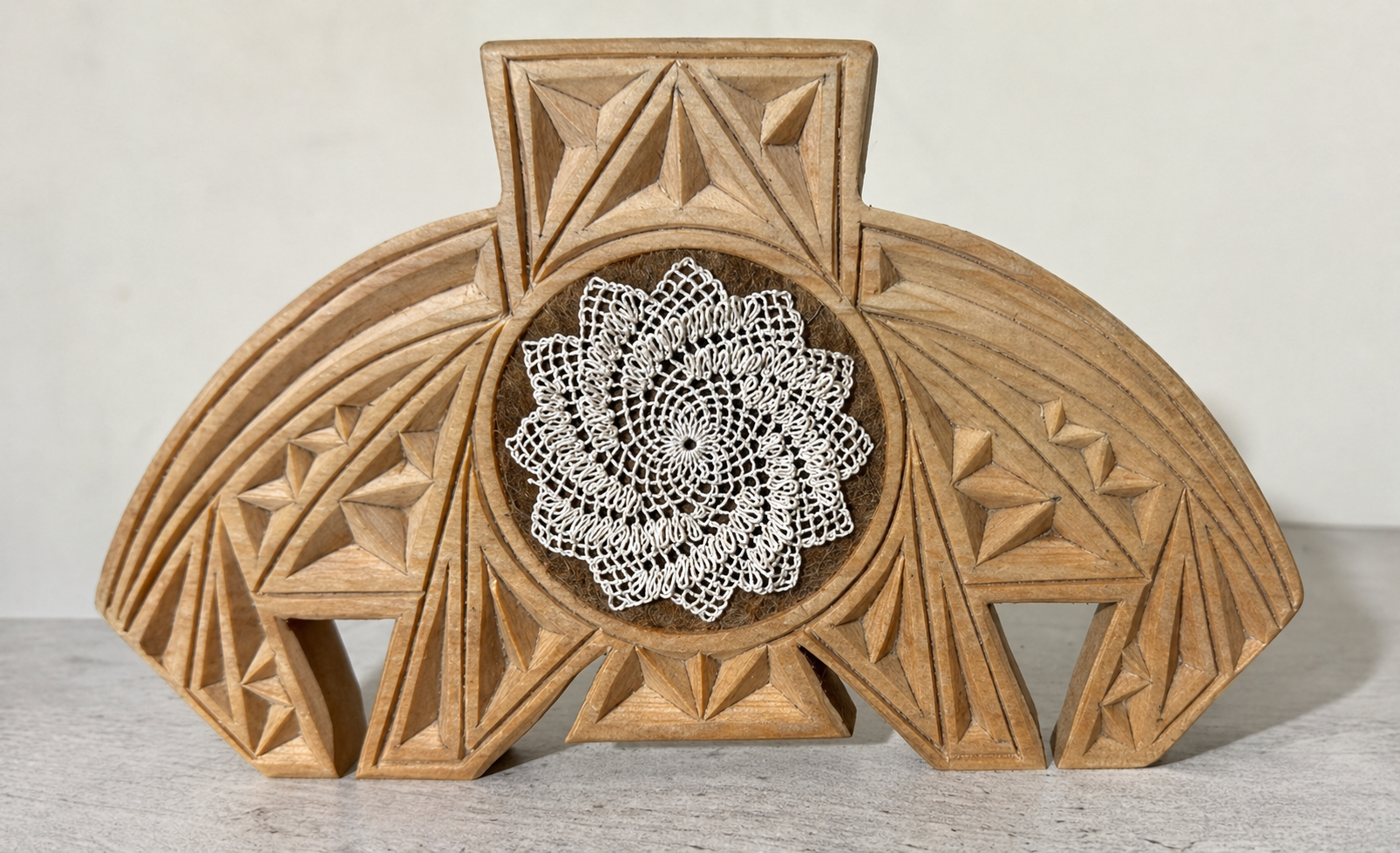
Maral Sheuhmelian, needlelace medallion with a central արեւախաչ (arevakhach,"sun cross") gracing the center of a wooden դաղդղան (daghdghan), a traditional carved Armenian amulet, Yerevan, Armenia, 2022. The arevakhach is a symbol of eternity found on countless Armenian artifacts and in sacred spaces (e.g., churches) for millennia; daghdghan were typically placed inside doorways and throughout the home and adorned the necks of cows and other farm animals, a practice which some Armenians continue to this day. Given that both the needlelace and the daghdghan are ancient symbols of protection, they signal and amplify the spiritual and cultural rootedness of Maral's creations. Photo credit: © Maral Sheuhmelian 2026.
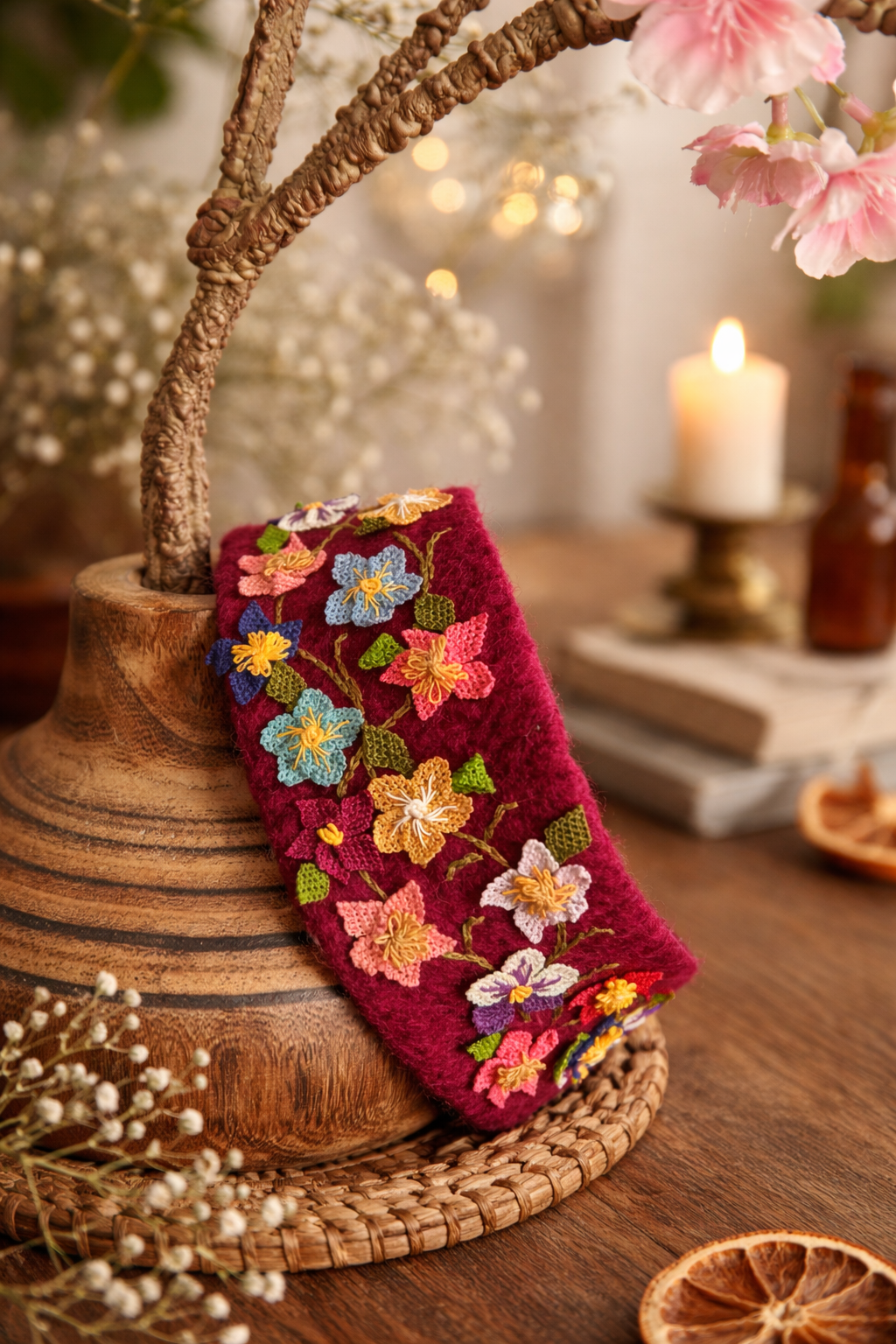
Maral Sheuhmelian, colorful Garin needlelace headdress, cotton thread on wool felt, Yerevan, Armenia, 2017. This reproduction of a վարդ-թանթանա (vart-tantana)—a traditional part of a nineteenth-century Armenian woman's headdress with its floral motifs symbolizing fertility and renewal—was one of several of Maral's works featured in the Folklife Festival Armenia: Creating Home in Washington DC, in 2018. Photo credit: © Maral Sheuhmelian 2026.
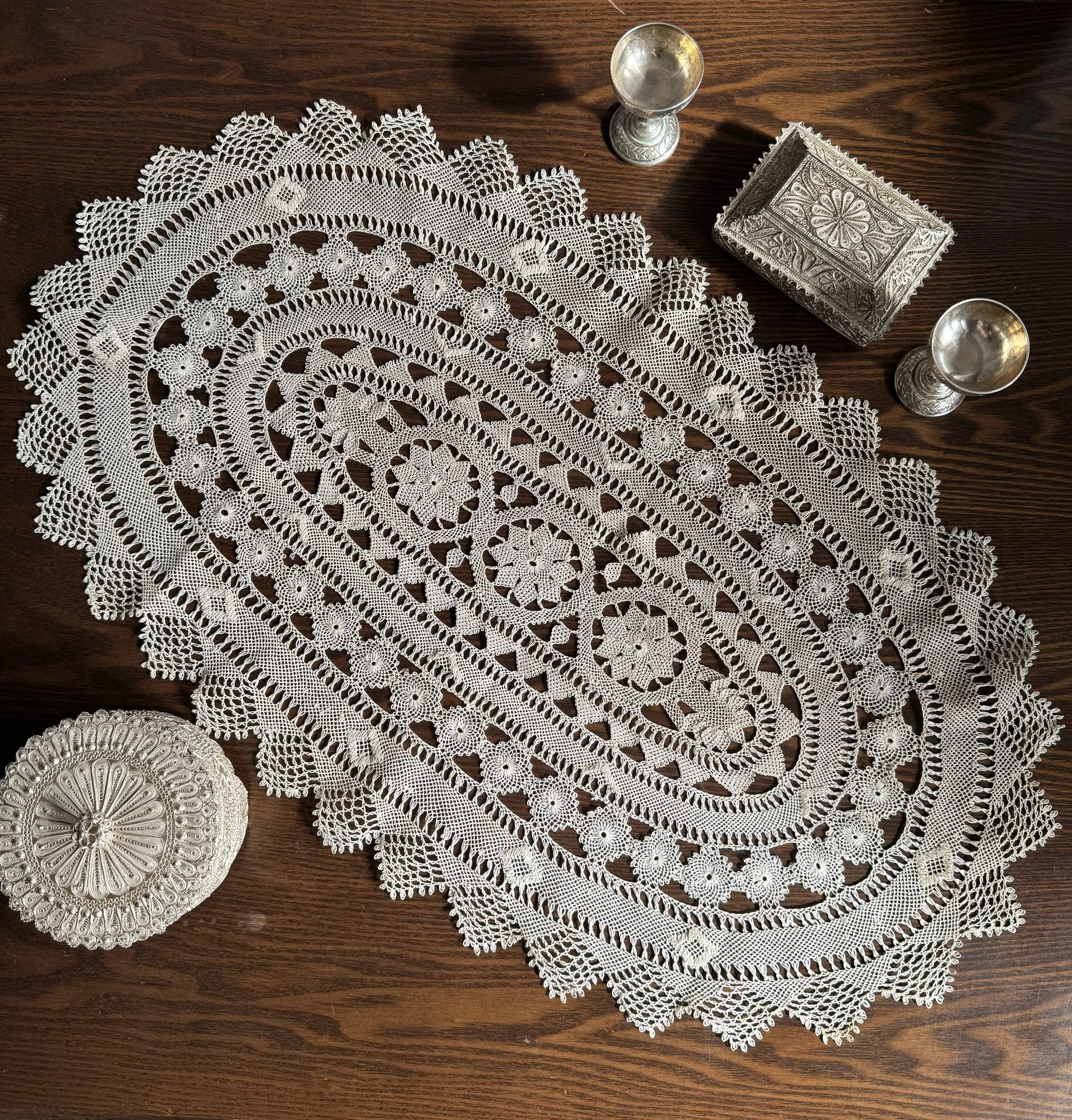
Maral Sheuhmelian, oval needlelace doily, Aleppo, Syria, 1985. Photo credit: © Maral Sheuhmelian 2026.
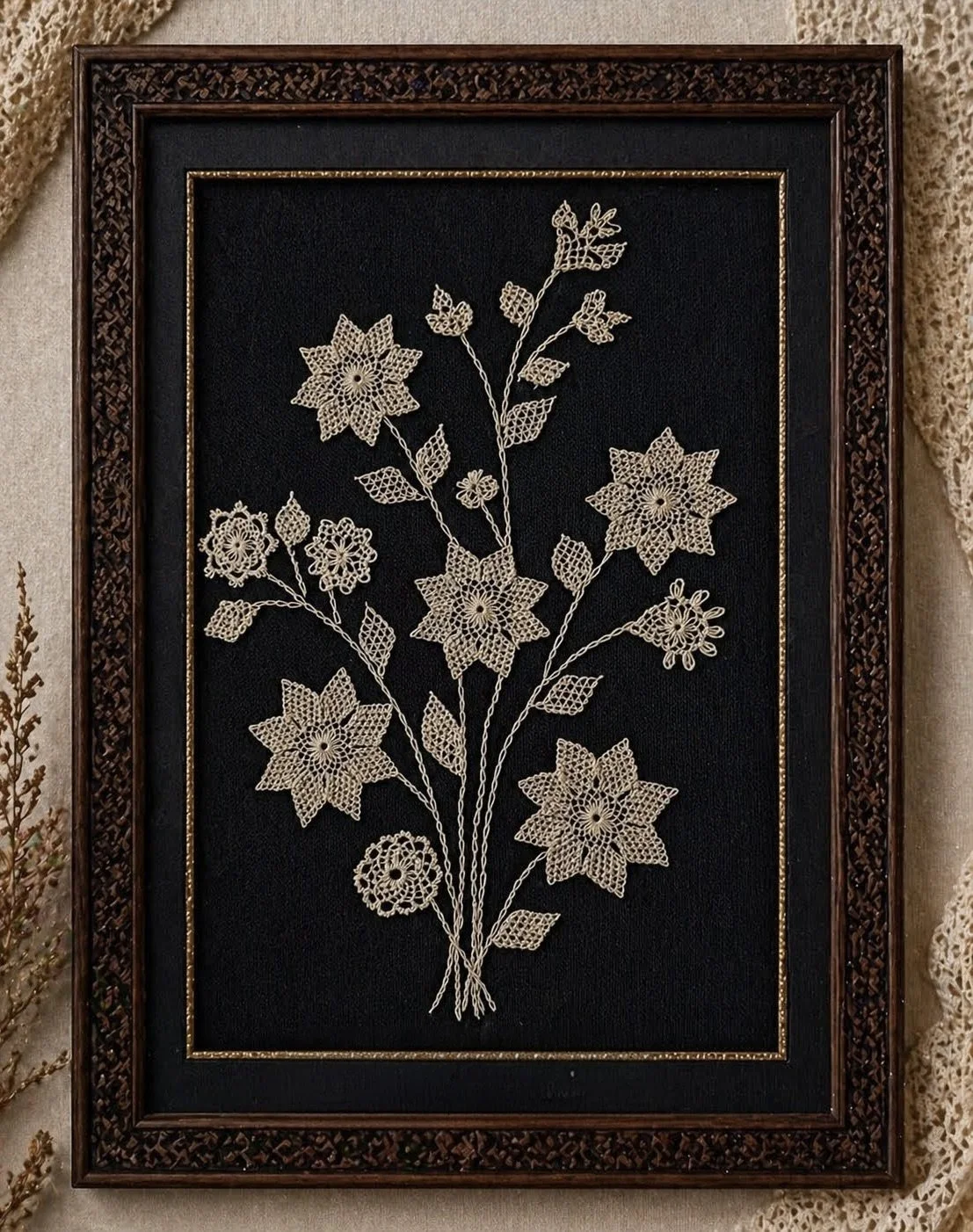
Maral Sheuhmelian, floral needlelace composition, Yerevan, Armenia, 2025. Photo credit: © Maral Sheuhmelian 2026.
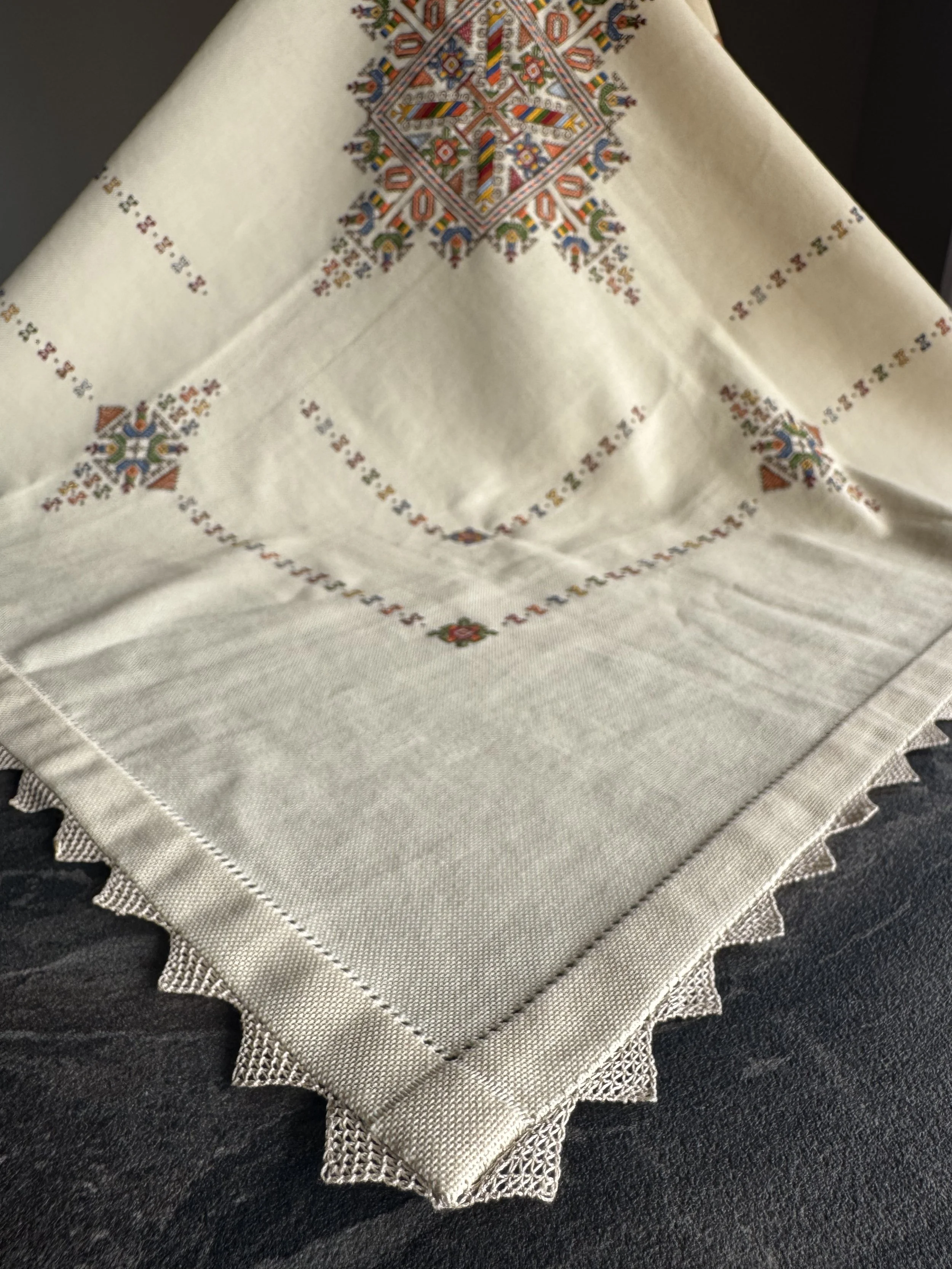
Maral Sheuhmelian, tablecloth with colorful Svaz embroidery and Garin needlelace trim, Yerevan, Armenia, 2000. Photo credit: © Maral Sheuhmelian 2026.
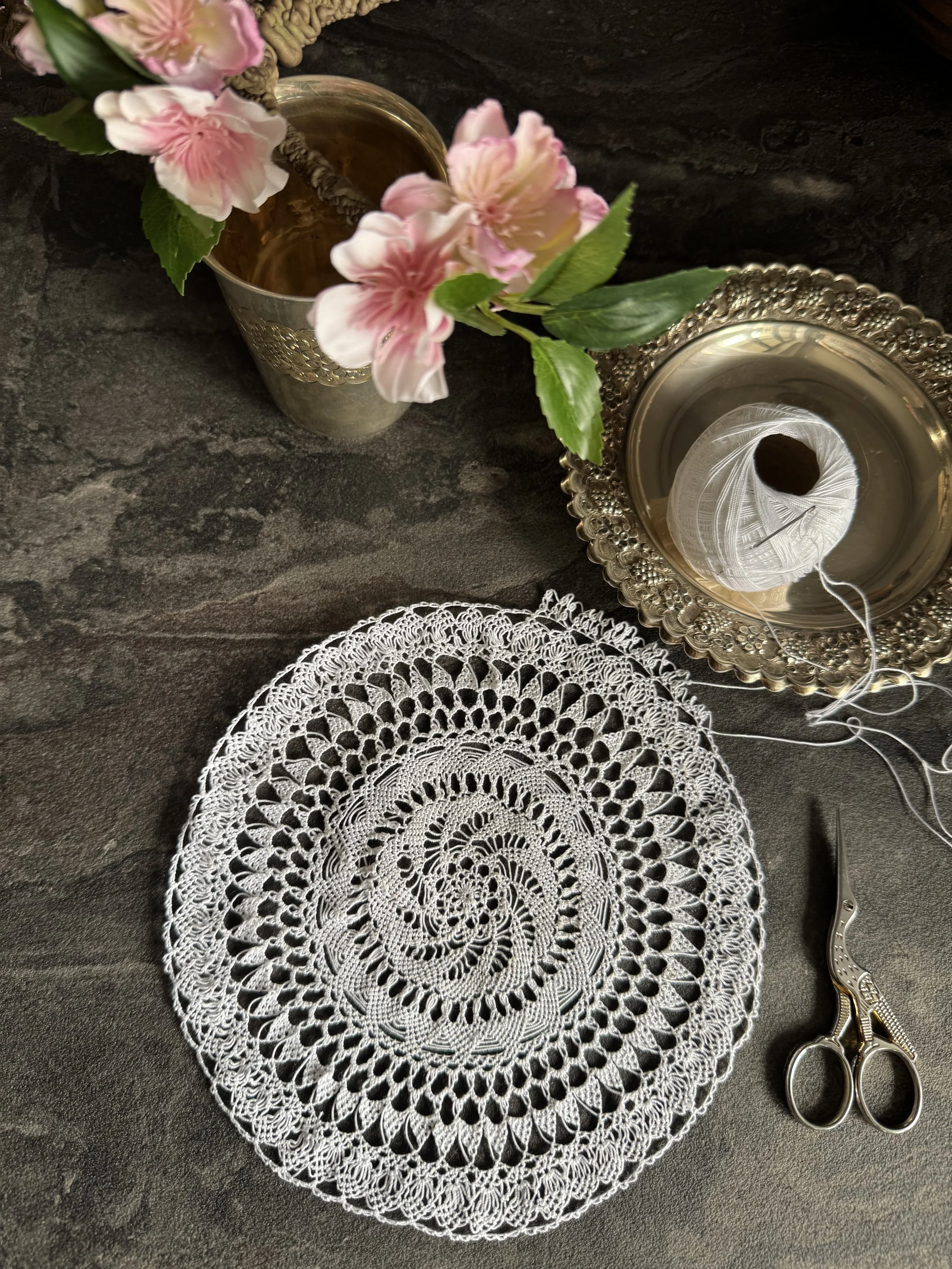
Maral Sheuhmelian, needlelace doily-in-process, Yerevan, Armenia, 2026. Photo credit: © Maral Sheuhmelian 2026.
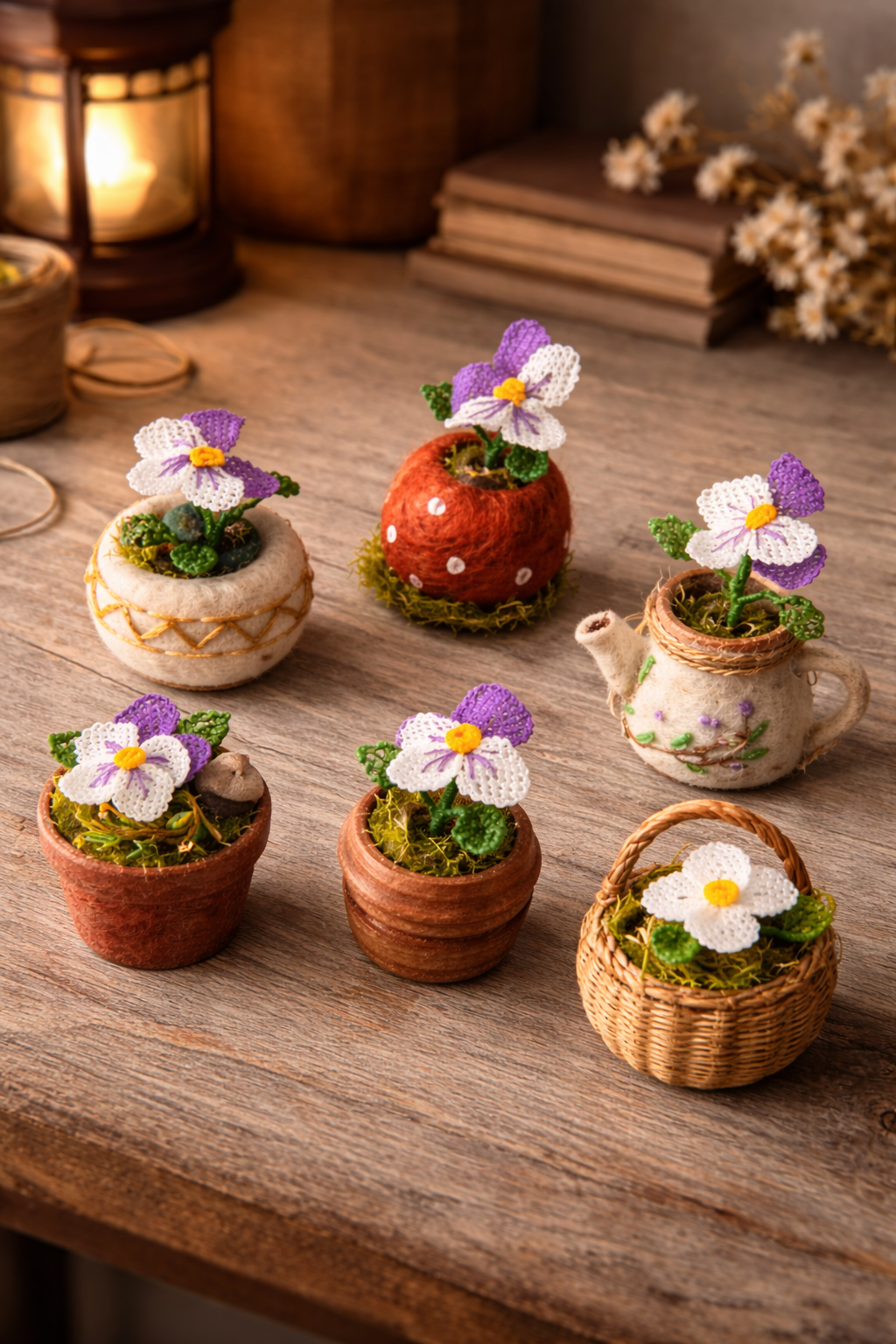
Maral Sheuhmelian, colorful Garin needlelace flowers, some "planted" in handwoven baskets, others in handmade pots—ceramic or felted and embroidered, Yerevan, Armenia, 2023. Photo credit: © Maral Sheuhmelian 2026.
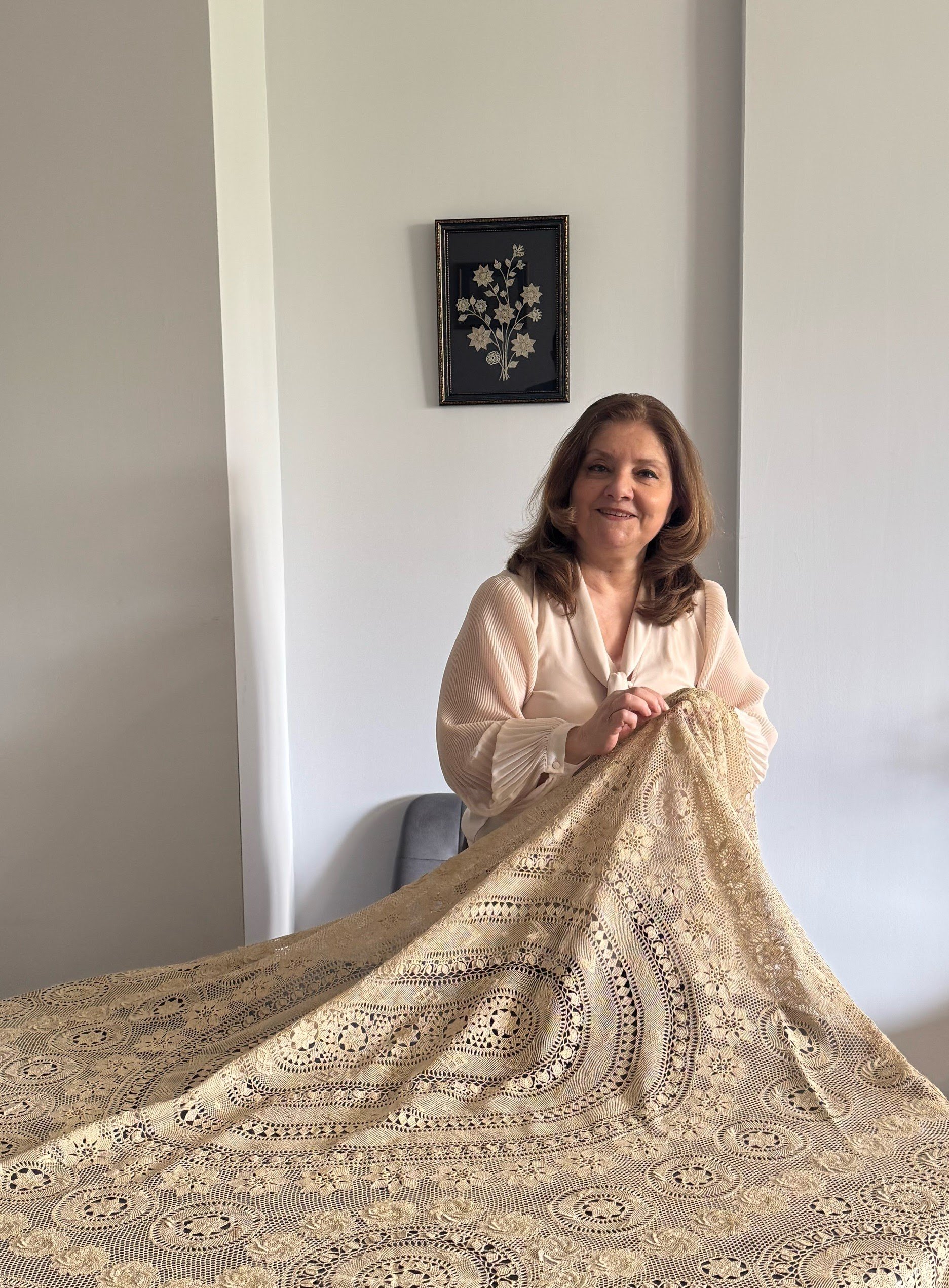
Mary Mikhjian (maker), large needlelace bedcover being repaired by her granddaughter, Maral Sheuhmelian (center), in Yerevan, Armenia. Made in Aleppo, Syria, pre-1960, for the օժիտ (ojid, “dowry”) of her daughter, Maral's mother, Lusine. Photo credit: © Maral Sheuhmelian 2026.
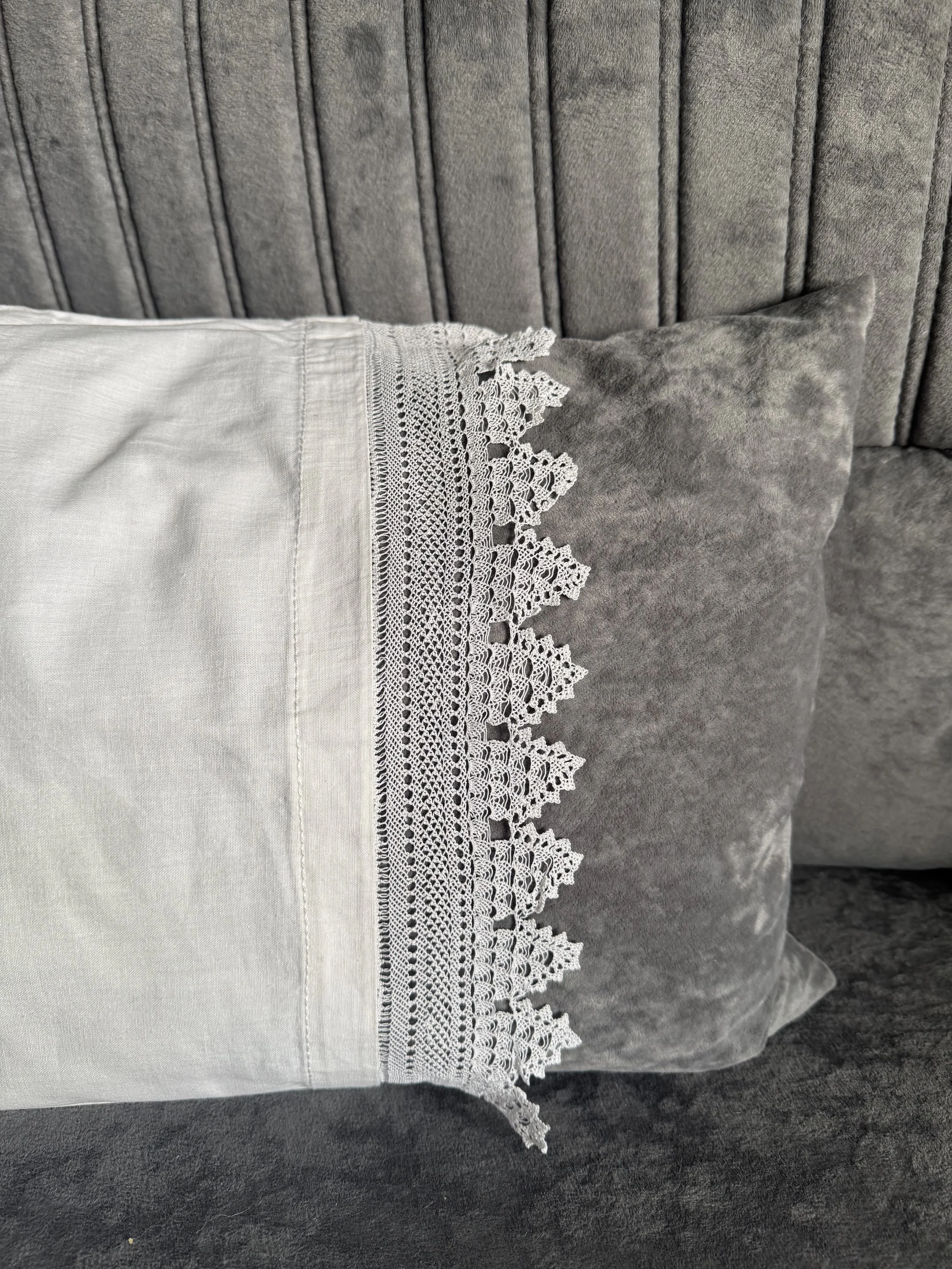
Maral Sheuhmelian, needlelace-trimmed pillowcase, Aleppo, Syria, 1985. Photo credit: © Maral Sheuhmelian 2026.
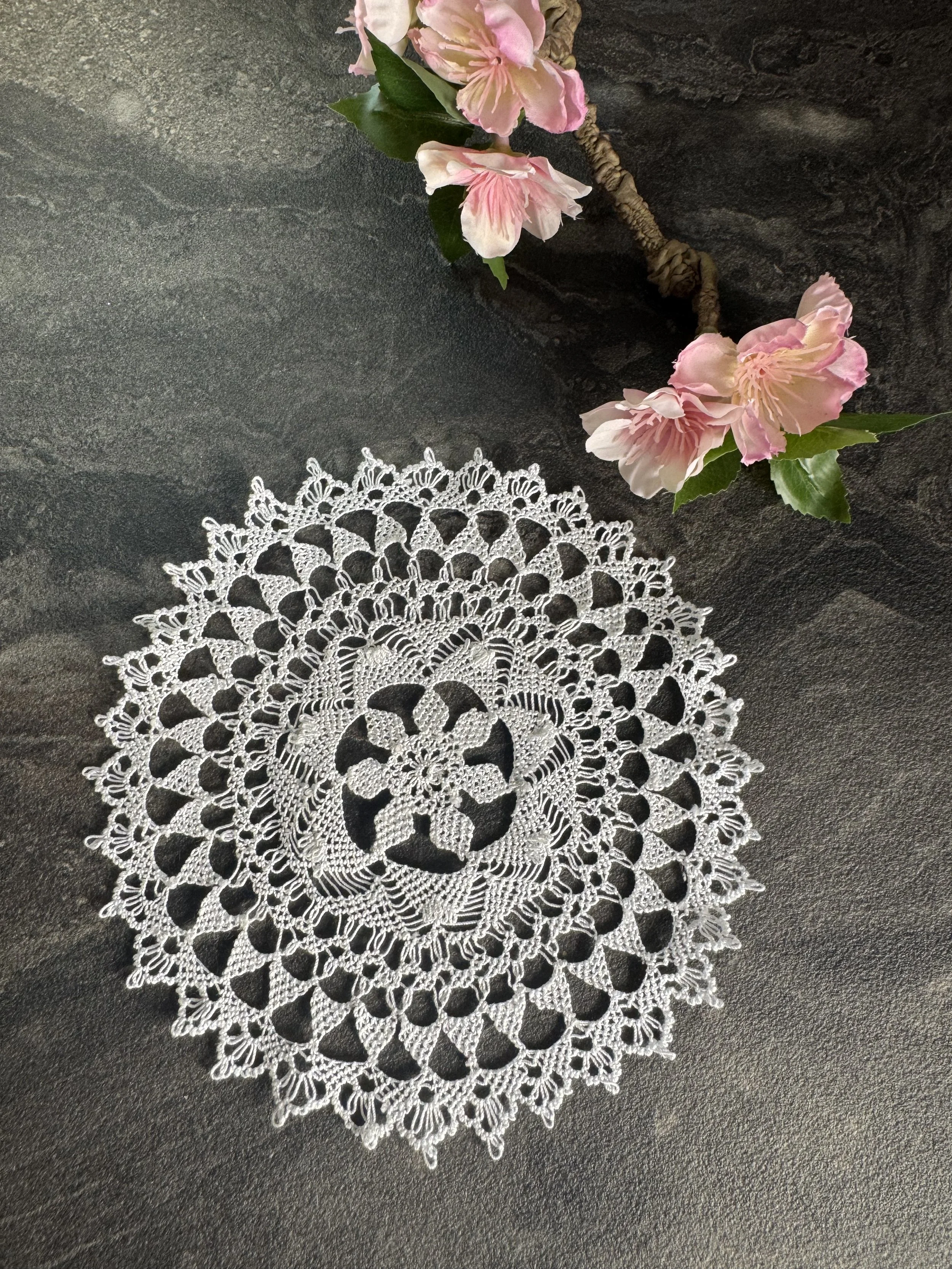
Maral Sheuhmelian, small needlelace doily, Yerevan, Armenia, 2025. Photo credit: © Maral Sheuhmelian 2026.
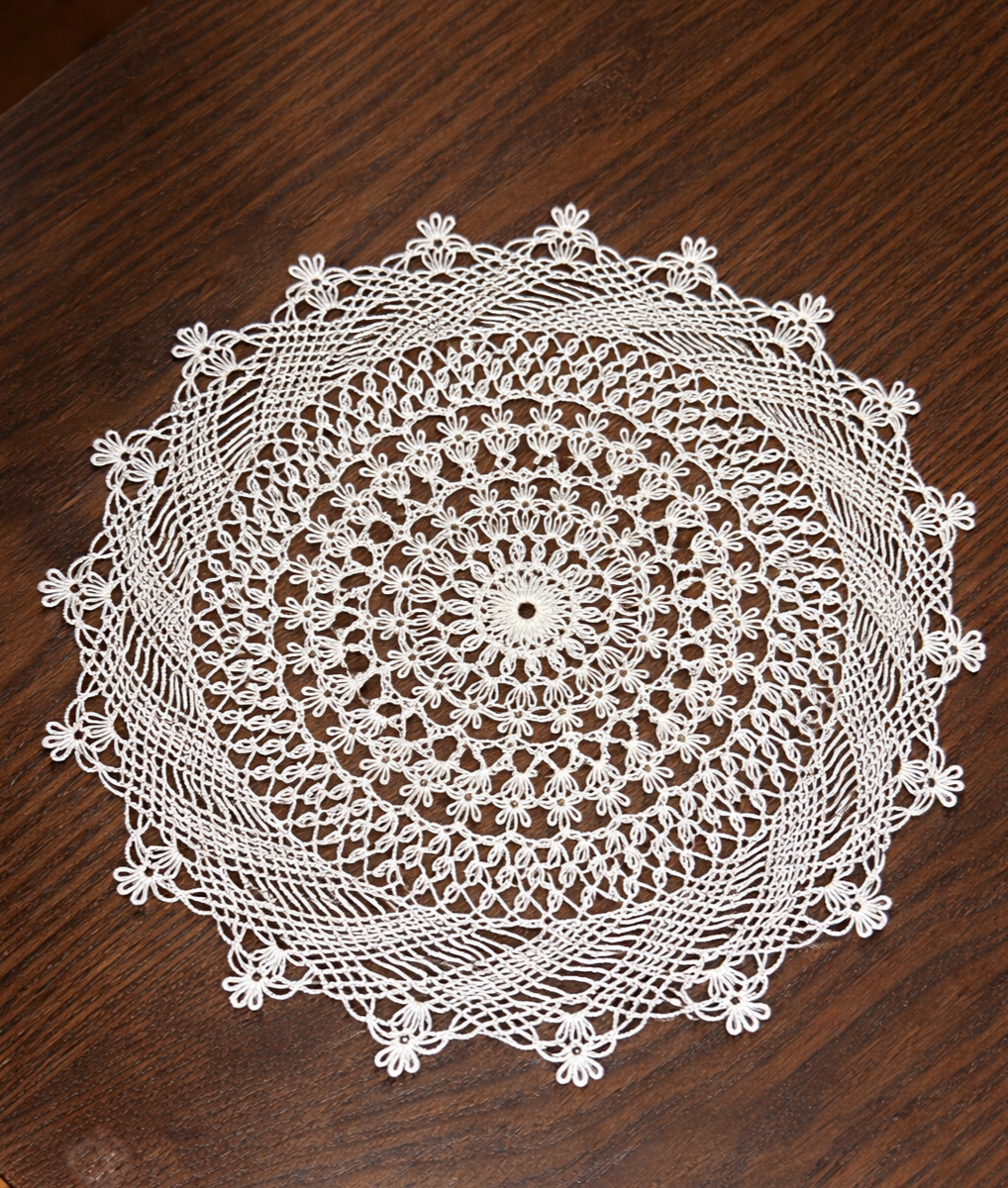
Maral Sheuhmelian, small needlelace doily, Yerevan, Armenia, 2025. Photo credit: © Maral Sheuhmelian 2026.
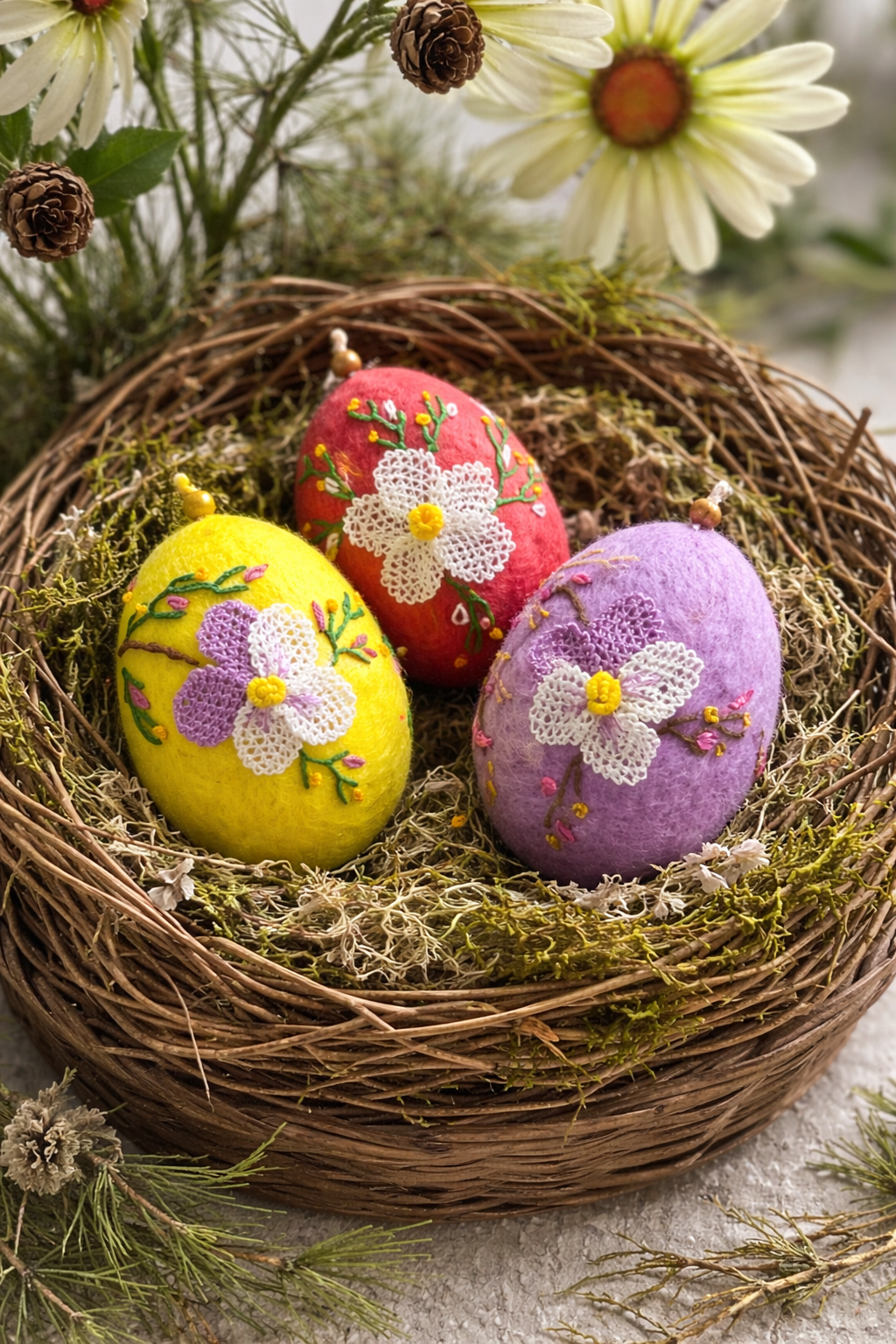
Maral Sheuhmelian, colorful Garin needlelace flowers stitched onto wool felt Easter eggs, Yerevan, Armenia, 2020. Photo credit: © Maral Sheuhmelian 2026.
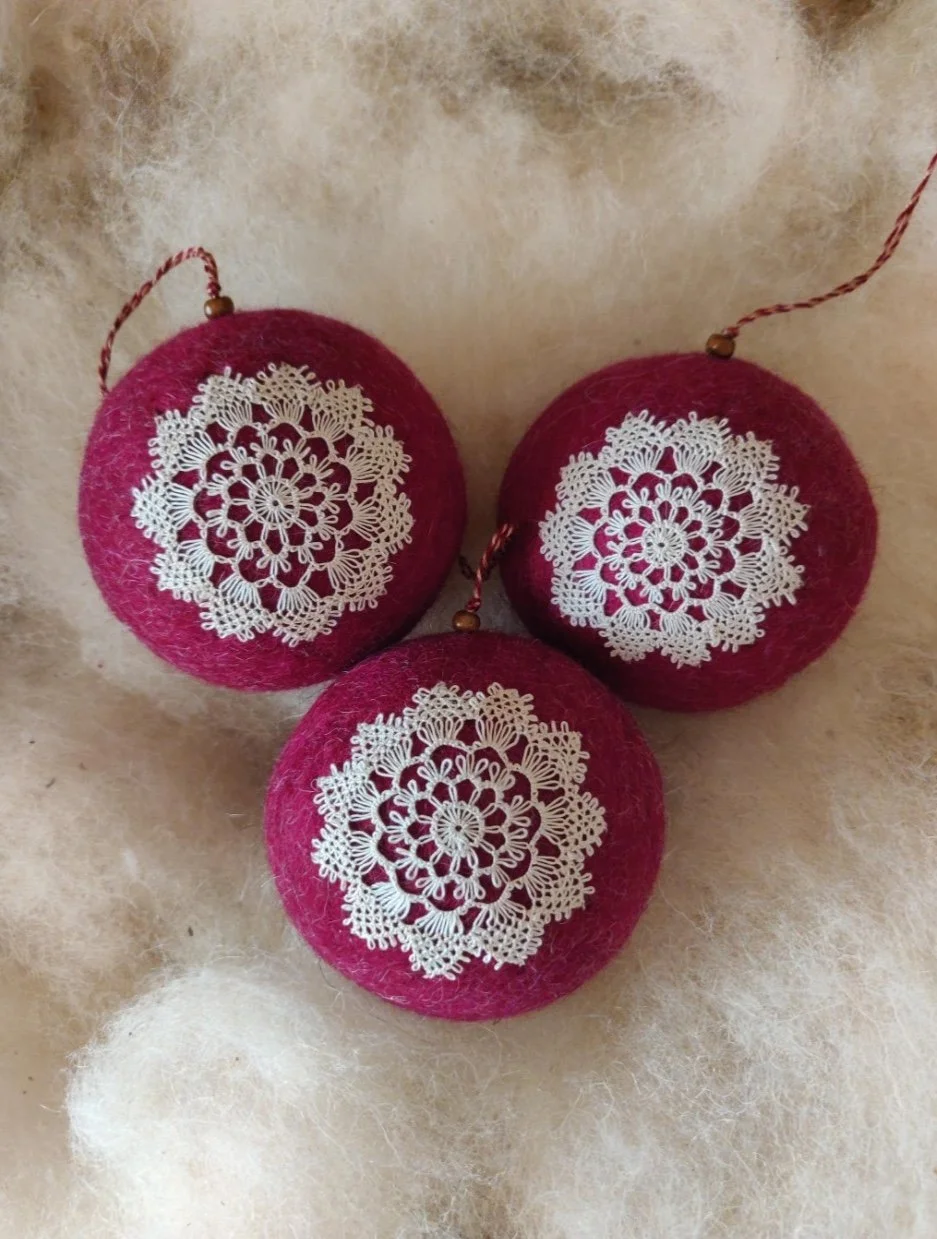
Maral Sheuhmelian, needlelace and wool felt ornaments, Yerevan, Armenia, 2018. This design is one of several Maral developed for a collection of needleworked Christmas ornaments. Photo credit: © Maral Sheuhmelian 2026.
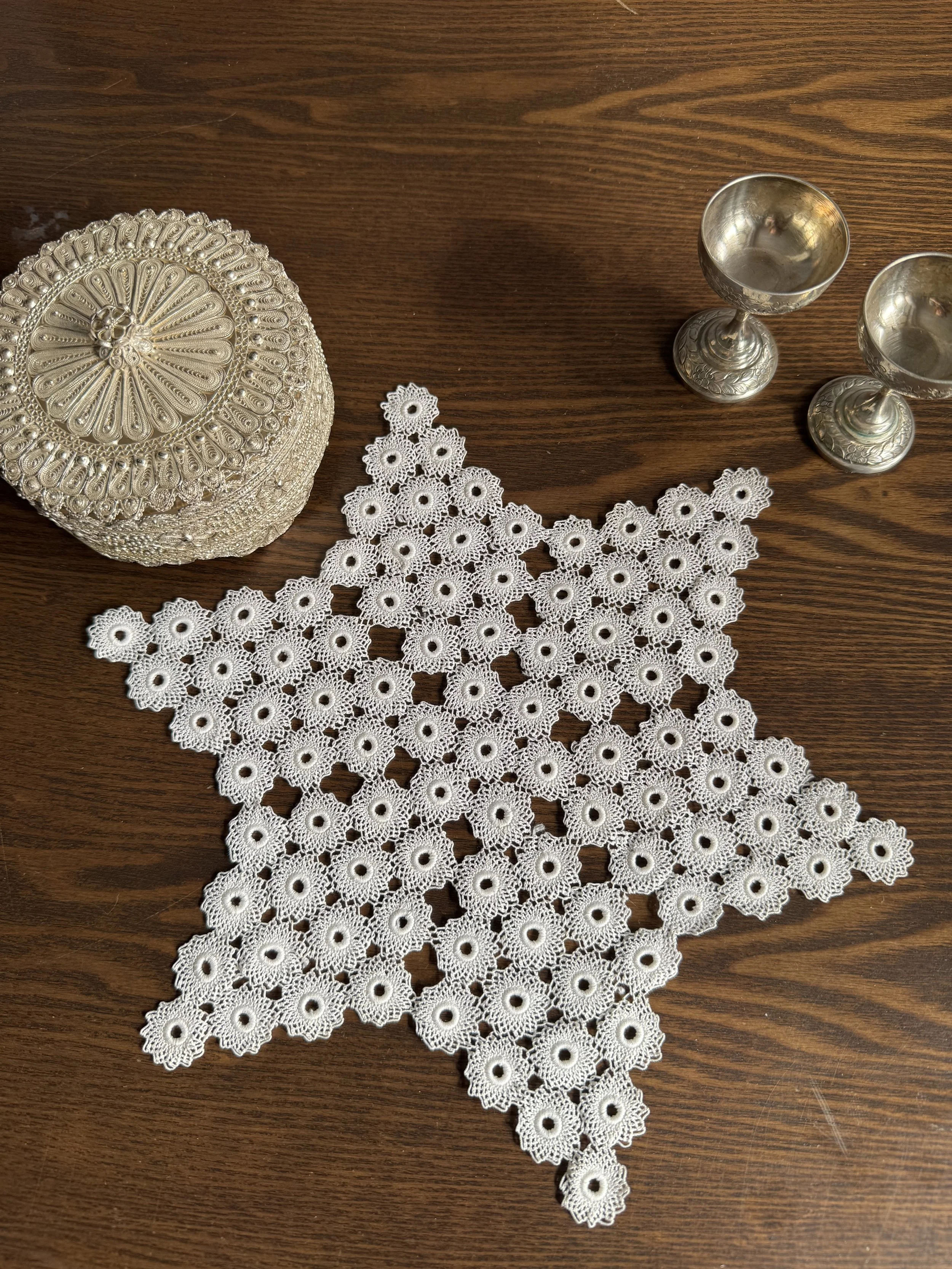
Maral Sheuhmelian, needlelace doily, Aleppo, Syria, 1980. This doily was made by stitching together ninety-seven small, identical medallions—a motif which Maral's grandmother called metelik ("penny," in Turkish). In her childhood, this motif was Maral's first step into the world of needlelace making. Photo credit: © Maral Sheuhmelian 2026.
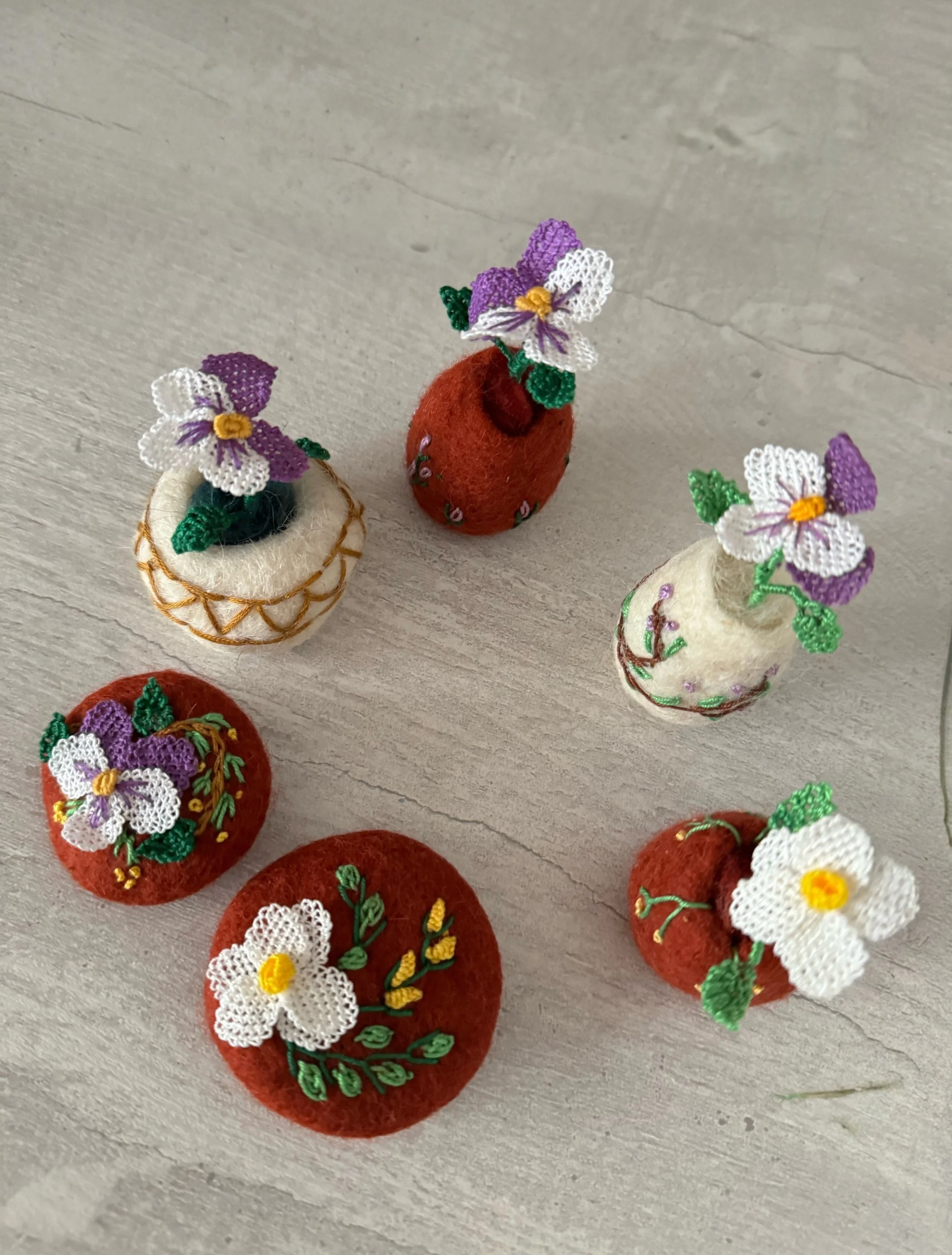
Maral Sheuhmelian, colorful Garin needlelace flowers on embroidered felt, Yerevan, Armenia, year unknown. Photo credit: © Maral Sheuhmelian 2026.